Conference - Natures in Translation
Location
About
ABOUT
This interdisciplinary conference Natures in Translation: AI, Ethics and Environmental Conservation explores the ethical implications of AI-assisted animal translation for environmental conservation and human–environmental relations. As AI systems increasingly promise to translate animal communications into human language, this project examines the profound ethical implications for biodiversity conservation, AI development and more-than-human relations.
The conference brings together perspectives from translation studies, animal behaviour science, philosophy, law, literature, computer science, social science, digital humanities and related fields.
It aims to build bridges between science, humanities and social science scholars, as well as practitioners working in conservation, animal welfare, AI development, animal studies and environmental advocacy.
At this conference, we invite perspectives from translation studies, animal behaviour science, philosophy, law, literature, computer science, social science, digital humanities and related fields to address urgent questions relating to the use of AI for environmental conservation purposes. Who has authority to speak for non-human animals? How do these technologies extract, process and interpret data, and what assumptions do they embed about animal communication? What conditions would allow these technologies to contribute to a more equitable listening culture, and how might we identify and address the logocentric or anthropocentric assumptions embedded in their design? What might a more expansive understanding of “listening” at the intersection of environmental conservation, translation studies, critical AI studies and media theory entail? What broader inter-disciplinary framework and collaborations can be developed to tackle these important epistemological, ethical, and ecological questions?
This conference is funded by AHRC-BRAID and delivered in partnership with New York University (NYU).
PROGRAMME
Thursday 1 October
- Registration and welcome
- Keynote: Eva Meijer - ‘The Politics of Translating Animal Languages’
- Panel 1: Translation, Linguistics, and Machine Learning
- Panel 2: Why We Need Animal Translation Studies
- Panel 3: Soundscapes, Extractivism, and Environmental Activism
- Panel 4: Sensing the non-Human World: AI Mediations
- Keynote: Ursula Heise - ‘Aliens, Animals and AI’
- Informal reception
- Keynote Presentation: Khairani Barokka - ‘On Oceanic Terms, On Memory's Conditions’
Friday 2 October
- Keynote: César Rodríguez-Garavito - ‘Listening to our Animal Kin: Opportunities, Risks, and Guardrails in AI-Assisted Animal Communication Studies’
- Panel 5: Conservation, Listening and Ecological Networks
- Keynote: Şebnem Susam-Saraeva - ‘Reconceptualising Reciprocity in Interspecies Communication: A posthuman and Eco/feminist Translation Ethics’
- Panel 6: Public Engagement and Technologies of Interspecies Understanding
- Panel 7: Machine Vision, Digital Twining, Multispecies Governance
- Closing remarks
To view the full conference programme, click here.
KEYNOTE SPEAKERS
Khairani Barokka
Khairani Barokka is a writer, artist, and former Editor of Modern Poetry in Translation. Among her honours, she’s been a UNFPA Indonesian Young Leader Driving Social Change, Delfina Foundation Associate Artist, Associate Artist at the UK’s National Centre for Writing, an Artforum Must-See, and a shortlistee for the 2023 Asian Women of Achievement Awards. Okka’s latest artistic commission (2025) was four short films directed in Jakarta for Birmingham’s Grand Union, and her fourth and fifth sole-authored books are both experimental translations: amuk (2024, longlisted for the Jhalak Poetry Prize) and prose debut Annah, Infinite (2025, The Bookseller Expert Pick).
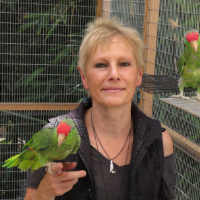
Ursula K. Heise
Ursula K. Heise is Distinguished Professor in the Department of English and the Institute of the Environment and Sustainability at UCLA, and a co-founder of the Lab for Environmental Narrative Strategies (LENS). Her research and teaching focus on the environmental humanities; contemporary environmental literature, arts, and cultures in the Americas, Germany, Japan, Spain, and Vietnam; literature and science; science fiction; and narrative theory.
Her books include, among others, Sense of Place and Sense of Planet: The Environmental Imagination of the Global (Oxford University Press, 2008) and Imagining Extinction: The Cultural Meanings of Endangered Species (University of Chicago Press, 2016), which won the 2017 book prize of the British Society for Literature and Science. She is co-editor of The Routledge Companion to the Environmental Humanities (2017), Environment and Narrative in Vietnam (2024), and Unsettling Extinction (2026). She co-edits the series Literatures, Cultures, and the Environment with Palgrave Macmillan She is also producer and writer of Urban Ark Los Angeles, a documentary about urban parrots created as a collaboration of LENS with the public television station KCET-Link. The first episode of Grand Theft Eco, a series of 'machinima' animated videos about the environmental futures of Los Angeles based on the storyworld and game engine of the videogame Grand Theft Auto V, was launched in 2025.
Heise’s work has consistently investigated how environmental storytelling converges and conflicts across different languages and cultures. She has proposed the concept of “eco-cosmopolitanism” as a way of approaching cross-cultural environmental thought and activism, and has emphasized the importance of environmental justice and multispecies justice as ways of thinking across the boundary between human and nonhuman species. She is currently at work on the second episode of Grand Theft Eco and a book entitled Reclaiming Ecotopia: Speculative Fiction and Environmental Futures.
In 2024, she was awarded the Biophilia Award for Environmental Humanities by Spain's BBVA Foundation. In 2026, Heise was elected member of the American Academy of Arts and Sciences.
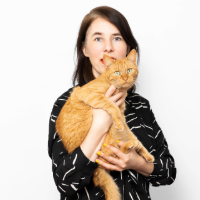
Eva Meijer
Eva Meijer is a philosopher, visual artist, writer and singer-songwriter. They wrote over twenty books including novels, philosophical essays, and poetry collections. Their work has been translated into over twenty languages. Meijer is affiliated with the University of Amsterdam as a postdoctoral researcher. They write essays and columns for Dutch newspapers, and are a member of the Multispecies Collective, a multispecies art collective. Meijer co-chairs the Dutch study group for Animal Philosophy. Recent books in English include Multispecies Assemblies, Multispecies Dialogues. Doing Philosophy with Animals, Children, the Sea and Others and the novel Sea Now. www.evameijer.nl.
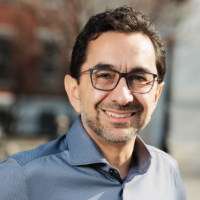
César Rodríguez-Garavito
César Rodríguez-Garavito is an Earth rights scholar, field lawyer, and founding director of the MOTH (More-Than-Human Life) Program at NYU School of Law, a leading global initiative advancing rights and well-being for humans, nonhumans, and the web of life that sustains us all. He is a Professor of Law and Director of the Earth Rights Research & Action (TERRA) Clinic at NYU. César’s work has advanced new ideas and legal actions worldwide on issues such as climate justice, Indigenous rights, and what he proposes to call “more-than-human rights” (rights of nature). His recent contributions to Earth rights have been recognized with a spot in the UN Museum’s Top 10 Culture for Impact 2024 List and a More-Than-Human Fellowship by the London Design Museum 2025.
His ongoing initiatives include a pioneering ethical and legal framework for AI-assisted animal communication studies, a partnership with Project CETI on the legal implications of AI-assisted whale language translation, collaborations with Indigenous leaders and communities of the Amazon and Pacific Island nations to protect forest and ocean beings, and work with the Society for the Protection of Underground Networks on legal pathways to protect the fungal kingdom of life.
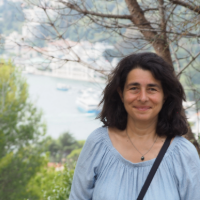
Şebnem Susam-Saraeva
Şebnem Susam-Saraeva holds a Personal Chair of Translation Studies at the University of Edinburgh. Her recent publications have focused on ecotranslation, particularly translation and ecofeminism, (knowledge) translation in climate crisis discourse, and interspecies communication. She is the co-founder of Eco-translation Network. Among her relevant publications are Translating with the Earth: Gender, Feminism and Eco-Translation (eds. with Carolyn Shread, 2025); Translation Rights of the More-Than-Human - Thoughts on Whale Bioacoustics (Translation Studies, Routledge, 2026); and, Eco-translation and Museums: In Search of Whale Communication (Cambridge Elements Translation and Interpreting, forthcoming). She was a Visiting Fellow at Trinity Long Room Hub for her work on translation and representation of cetacean communication in arts and music (2023) and a Leverhulme International Fellow for her project 'Translation and Cetacean Communication Systems: Interactions and Synergies' (2024).
For the full conference programme and practical information, including travel and venue details, please visit: https://wp.lancs.ac.uk/animalsintranslation/conference/.
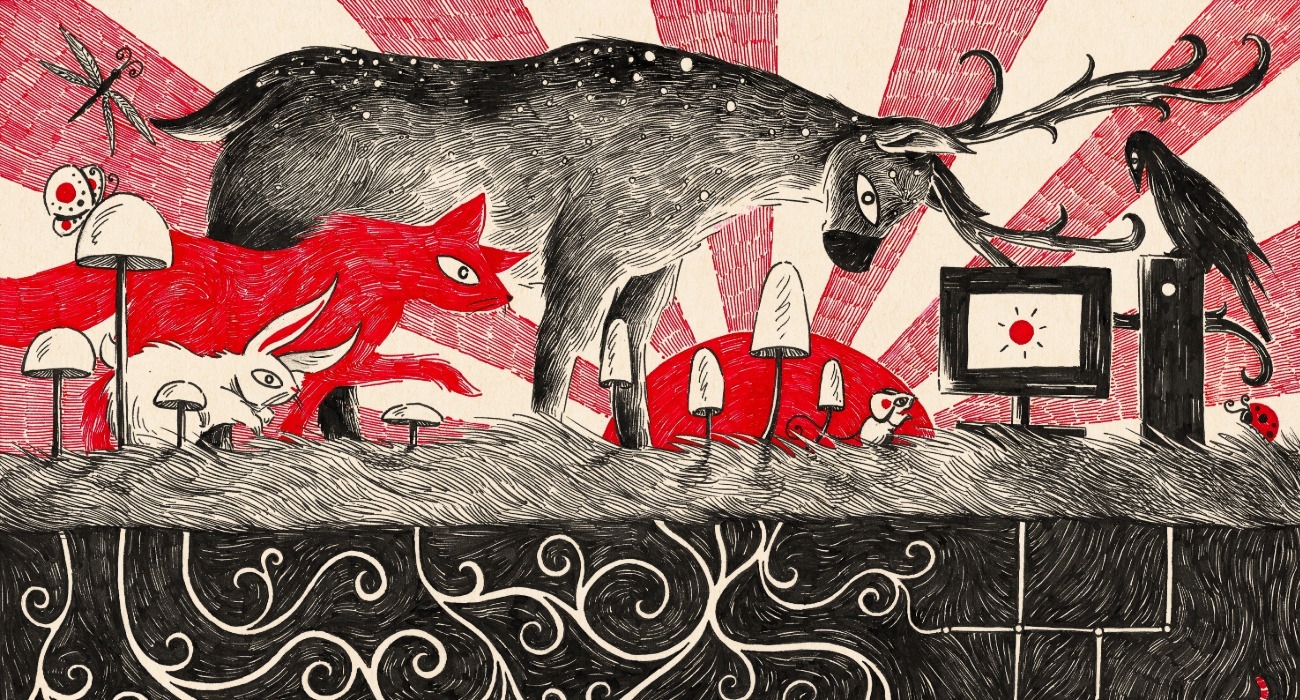
Illustration at top of page by Mollie Ray.
DATE
LOCATION