
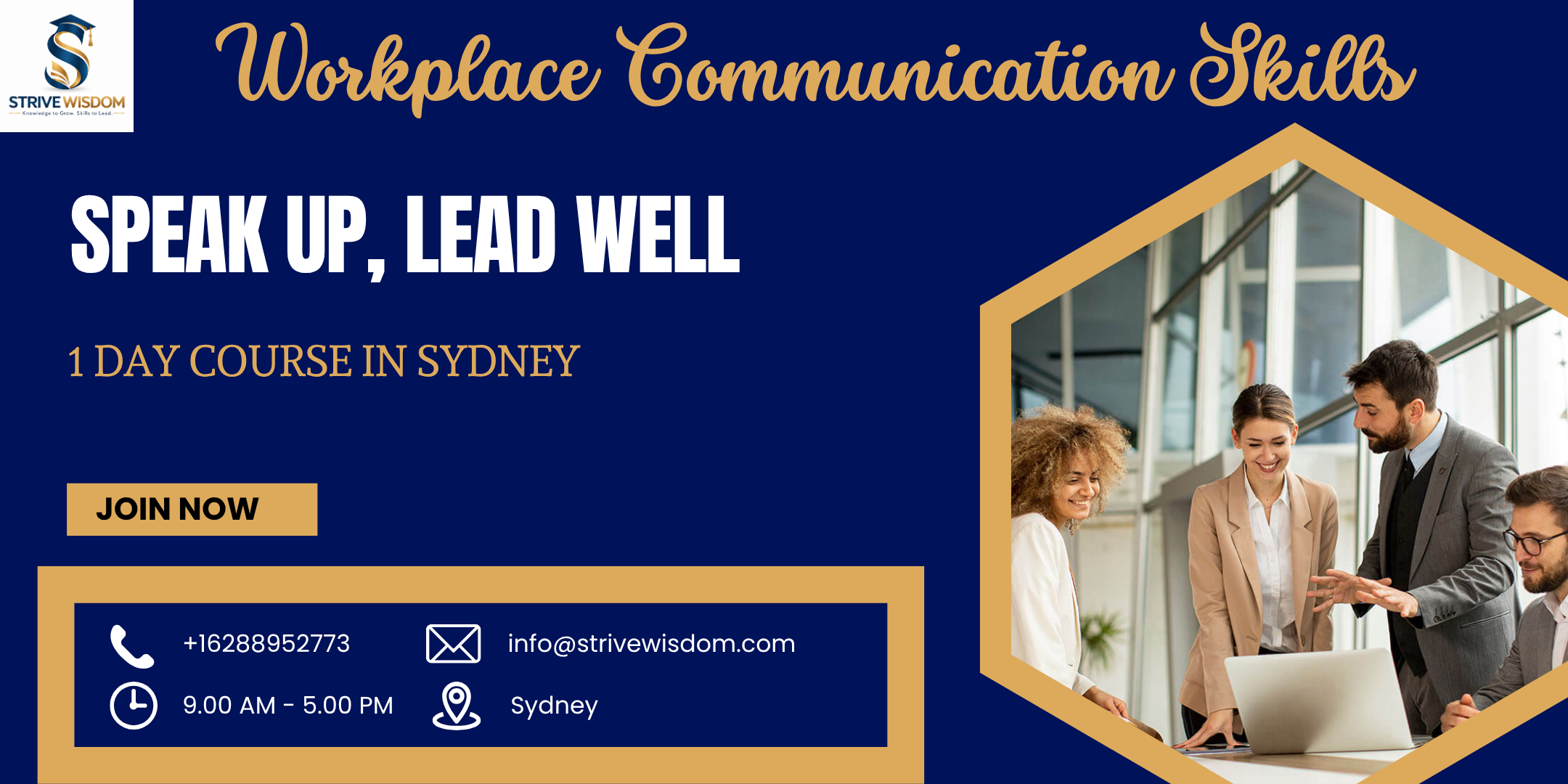
Workplace Communication Skills: Speak Up, Lead Well - Sydney
Location
Hosted by
Strive Wisdom
About
Session Details
• Duration: 1 Full Day (8 Hours)
• Delivery Options: In-Person Classroom | Virtual Session Available on Request
• Language: English
• Credits: 8 PDUs / Training Hours
• Certificate: Course Completion Certificate
• Refreshments: Lunch, snacks & beverages included
• Trainers: Experienced local trainers
What You’ll Learn
• Foundations of effective workplace communication
• Active listening and questioning
• Clear and confident communication
• Verbal, non-verbal and digital communication
• Giving and receiving feedback
• Difficult conversations and workplace conflict
• Communication for teamwork and collaboration
Learning Outcomes
Participants will learn to:
• Communicate clearly and professionally
• Listen actively and reduce misunderstandings
• Adapt communication to different audiences
• Handle feedback and difficult conversations constructively
• Strengthen workplace relationships and collaboration
Who Should Attend
Suitable for professionals, team members, supervisors, team leaders, managers, and anyone looking to improve workplace communication.
Give Your Team the Skills to Succeed
Customised sessions are available to address your organisation’s communication, collaboration, feedback, and conflict-management needs.
City: Sydney
This course is available in major Australian cities, including Perth, Adelaide, Brisbane, Melbourne, Canberra, and other locations, with flexible dates available on request.
For any questions or assistance, please contact us at info@strivewisdom.com
Course Modules:
Module 1: Foundations of Effective Workplace Communication
• Understand the principles of clear, purposeful, and professional workplace communication.
• Explore how communication styles, context, tone, and audience influence workplace interactions.
• Identify common communication barriers and approaches for reducing misunderstandings.
• Icebreaker
Module 2: Active Listening and Understanding Others
• Explore active listening techniques for improving understanding and workplace relationships.
• Recognise the importance of questioning, clarification, paraphrasing, and attentive listening.
• Apply listening strategies when working with colleagues, clients, and diverse workplace audiences.
• Simulation
Module 3: Communicating Clearly and Confidently
• Develop techniques for expressing ideas, information, and expectations in a structured manner.
• Explore professional language, tone, clarity, conciseness, and confidence in workplace conversations.
• Identify ways to communicate effectively during meetings, discussions, presentations, and one-to-one interactions.
• Role Play
Module 4: Non-Verbal and Digital Communication
• Understand how body language, facial expressions, posture, tone, and eye contact influence communication.
• Explore professional communication practices across email, messaging platforms, video meetings, and other digital channels.
• Identify ways to maintain clarity, professionalism, and appropriate tone when communicating digitally.
• Case Study
Module 5: Feedback and Difficult Workplace Conversations
• Explore constructive approaches to giving and receiving workplace feedback.
• Understand how empathy, clarity, and respectful language support challenging conversations.
• Develop strategies for addressing misunderstandings, differing perspectives, and communication concerns.
• Group Discussion
Module 6: Communication, Collaboration and Conflict
• Explore communication approaches that support teamwork, cooperation, and productive workplace relationships.
• Understand how communication patterns can contribute to or reduce workplace conflict.
• Apply techniques for managing disagreements while maintaining respect, clarity, and professional boundaries.
• Hands On Activity
Module 7: Applying Communication Skills in the Workplace
• Integrate communication techniques into meetings, workplace discussions, team interactions, and professional relationships.
• Identify personal communication strengths and areas for continued development.
• Develop practical approaches for adapting communication to different people, situations, and workplace requirements.
• Workshop Exercise