

Mornington Peninsula Theatre Company inc.
Classic theatre with a modern minimalist twist
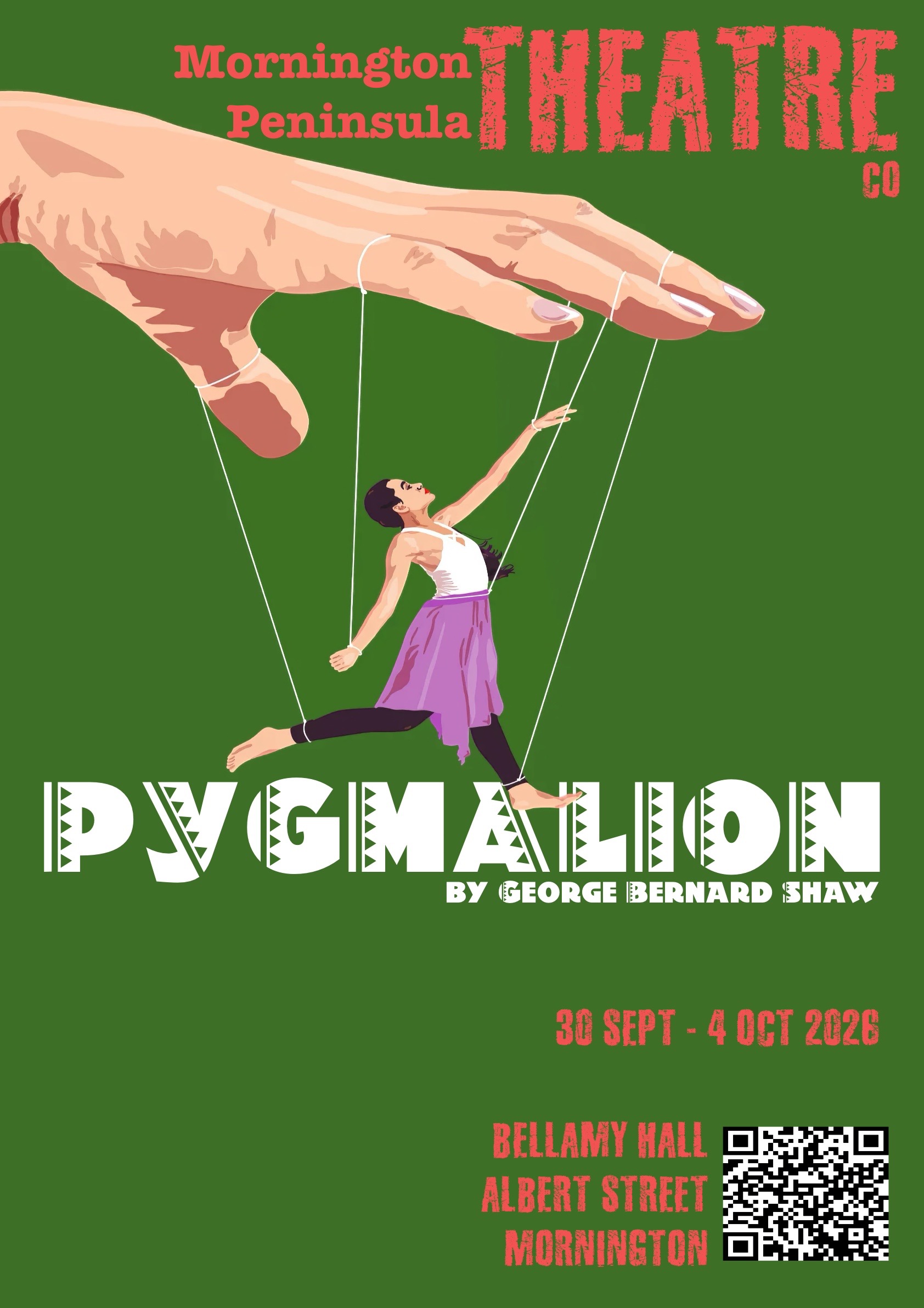
Pygmalion
Between Wednesday 30 September 2026 and Sunday 4 October 2026
George Bernard Shaw's Pygmalion is a brilliant social satire and comedic masterpiece. Through the dynamic relationship of a harsh phonetics professor and a street-smart flower girl, Shaw dissects the rigid British class system, explores themes of female independence, and subverts the classic romantic fairy tale.The Mythical FoundationThe title directly references the ancient Greek myth of Pygmalion, a sculptor from Ovid's Metamorphoses who crafted an ivory statue of the perfect woman and fell deeply in love with his own creation. Shaw cleverly adapts this narrative, replacing the sculptor with Professor Henry Higgins—a brilliant but socially insensitive phonetics expert. His "statue" is Eliza Doolittle, a coarse, uneducated Cockney flower girl selling her wares near Covent Garden in London. Higgins boasts to his colleague, Colonel Pickering, that he can transform Eliza into a polished duchess simply by altering the way she speaks.Language as a Social BarrierAt its core, Pygmalion is about the arbitrary and superficial nature of social class. Shaw uses speech and diction as the primary symbols of social mobility. In early twentieth-century England, a person's accent immediately dictated their societal standing, educational opportunities, and financial potential. Eliza speaks "kerbstone English," a heavy dialect that relegates her to the lower rungs of society.Higgins’s philosophy is that language dictates reality; by erasing her Cockney accent and replacing it with refined, upper-class articulation, he fundamentally changes how the world treats her. Through grueling training, cold psychological conditioning, and immersion in the Higgins household, Eliza’s speech is successfully rehabilitated. She moves from a marginalized, penniless flower seller into someone who can seamlessly blend into elite high society.Gender Dynamics and ObjectificationAs the experiment succeeds and Eliza passes flawlessly at the Ambassador’s garden party, Shaw shifts the play’s focus from a comedy of manners into a poignant exploration of gender dynamics. The success of the ball highlights the cruel reality of the experiment. Higgins and Pickering enthusiastically celebrate their linguistic triumph, completely ignoring Eliza’s labor, emotional growth, and future. To them, Eliza is not a human being with feelings, but a scientific object or a pawn in a wager.Eliza realizes that she has been irrevocably changed: she no longer fits into the slums of Covent Garden, yet she is not truly a part of the upper class. She is trapped in an agonizing middle ground. Furious at being reduced to an object, she confronts Higgins, throws his slippers at him, and asserts her humanity and need for respect. In this pivotal moment, Shaw asserts that a person's dignity goes far beyond their accent or societal presentation.The Subversion of Middle-Class MoralityAlongside Eliza’s journey, Shaw provides a brilliant sub-plot involving her father, Alfred Doolittle, a common dustman. Doolittle is a humorous, indolent man who loudly defends the "undeserving poor," preferring his carefree lifestyle over the strict, hypocritical morality of the middle class.Ironically, through a jest made by Higgins to an American millionaire, Doolittle is unexpectedly granted a massive yearly income and thrust into the respectable middle class. Doolittle’s sudden wealth actually makes him miserable; he complains that he is now burdened by middle-class responsibilities, familial demands, and false respectability. Through Doolittle, Shaw satirizes societal hypocrisies, demonstrating that social advancement and wealth do not automatically translate to happiness or genuine moral goodness.Independence and AmbiguityThe resolution of Pygmalion is what truly elevates it from a traditional romantic comedy. Audiences in Shaw's time—and viewers of later adaptations like My Fair Lady—often assumed or desired that Professor Higgins and Eliza Doolittle would fall in love and marry. However, Shaw fiercely rejected this romanticized conclusion.At the end of the play, Eliza explicitly rejects the notion of being Higgins's servant, companion, or possession. She chooses to marry Freddy Eynsford Hill, a young gentleman who is deeply enamored with her and treats her with genuine affection and respect. Because Freddy has little money, Eliza confidently declares her intention to use the phonetic knowledge she acquired from Higgins to make her own living, threatening to open her own flower shop or work for Higgins's rival.By denying his characters a conventional romantic resolution, Shaw drives home his overarching message: Pygmalion is fundamentally a story of self-actualization, not romance. The play is not about turning a poor girl into a suitable wife for an arrogant phonetician; it is about turning a disrespected woman into an independent human being who demands equality.Legacy and Enduring RelevanceGeorge Bernard Shaw’s Pygmalion remains one of his most frequently performed and studied works. Its timelessness stems from the universal nature of its themes. In any era, society judges people based on superficial markers like appearance, wealth, and vocabulary. Shaw’s play serves as a profound reminder that social structures are entirely human constructs.The play also stands as a foundational text for the examination of gender equality, highlighting the struggles of working-class women and their fight for autonomy. Pygmalion warns against the dangers of objectification, advocating that true respect and personal agency are more valuable than social status.Through sparkling dialogue, sharp wit, and deeply realized characters, Shaw constructs a narrative that is both wildly entertaining and intellectually challenging. The enduring legacy of Pygmalion, evident in its countless adaptations, spin-offs, and continuous theatrical revivals, proves that Shaw’s critique of rigid class structures and his advocacy for human dignity continue to resonate with modern audiences.
Bellamy Hall Theatre

The Tempest
Between Tuesday 19 January 2027 and Sunday 24 January 2027
William Shakespeare’s The Tempest explores themes of political betrayal, magic, and colonial power. Prospero, the usurped Duke of Milan, is marooned on a remote island with his daughter, Miranda. He uses sorcery to rule the island's spirits and its indigenous inhabitant, Caliban.
Bellamy Hall Theatre Courtyard
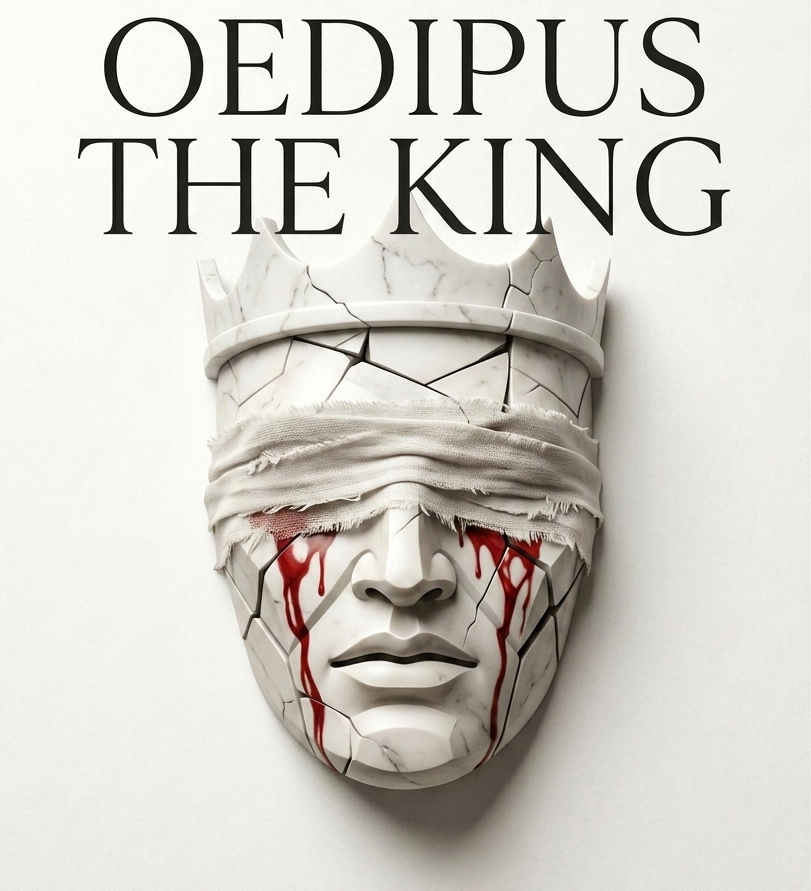
Oedipus The King
Between Thursday 1 July 2027 and Sunday 4 July 2027
Sophocles’ Oedipus the King is the quintessential Greek tragedy exploring the futility of defying fate. Prophesied to murder his father and marry his mother, Oedipus flees his home to escape this doom.Through his pride and intellect, he solves the Sphinx’s riddle. This feat wins him the crown of Thebes. However, when a plague strikes the city, his relentless search for the cause uncovers a horrifying truth. He has already fulfilled the prophecy.
Bellamy Hall Theatre

R.U.R. (Rossum’s Universal Robots)
Between Wednesday 8 July 2026 and Sunday 12 July 2026
Written in 1920, R.U.R. (Rossum’s Universal Robots) by Karel Čapek is the groundbreaking science-fiction drama that introduced the word “robot” to the world. Set in a remote industrial factory, the play follows the executives and scientists of Rossum’s Universal Robots, a company that manufactures artificial workers designed to serve humanity. As global dependence on these engineered labourers grows, ethical tensions begin to surface: What defines humanity? Can life be manufactured? And what happens when creation begins to question its purpose? Blending sharp satire, political allegory, and prophetic insight, R.U.R. explores ambition, conscience, revolution, and the fragile line between maker and made.
In an age where we are all concerned with the impact of AI this is a "must see"!
No Robots were harmed in the making of this production, although one Roomba is now seeing a therapist.
Bellamy Hall Theatre

Romeo and Juliet
Between Wednesday 11 February 2026 and Saturday 21 February 2026
Welcome to the inaugural "COURTYARD CLASSIC" -- An annual summer series of the greatest plays ever written, performed in the open air at The Courtyard behind Bellamy Hall Theatre.
We kicxk off with everyone's favourite rom com that turns into tragedy, ROMEO and JULIET
The Courtyard behind Bellamy Hall Theatre - enter via Octavia Street
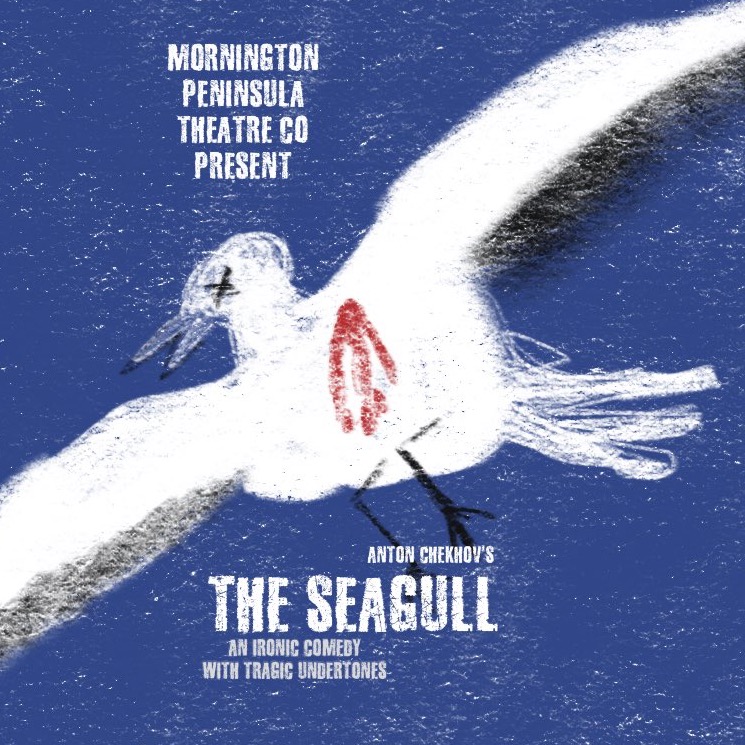
The Seagull
Between Thursday 23 October 2025 and Sunday 26 October 2025
A brand-new adaptation of Chekhov's seminal melancholic comedy about a group of dysfunctional arty types who gather to see the premiere of Konstantin's new play, while being in love with the wrong person. So when his mother's lover starts forming a relationship with his girlfriend, it all goes downhill. Oh, and there's a gun. And a seagull.
Content Warning: mentions of child bereavement, suicide, and suicidal ideation, particularly in the later acts. Additionally, the play contains themes of unfulfilled ambitions, unrequited love, and the complexities of artistic success. Smoke effects and gunshots.
No seagulls were harmed in the making of this production.
Bellamy Hall (St Peter's Church Hall)

Launch party to celebrate MPtc's new home - BELLAMY HALL
Friday 26 September 2025
Come and join us to celebrate the new home base for Mornington Peninsula Theatre Company Inc. at Bellamy Hall, cnr of Octavia & Albert Streets, Mornington. A great evening awaits you with music from Jon & Wendy Wade, door prizes, free refreshments and nibbles, raffles, and some fun and games. Come and & learn about what MPtc has in store for future shows and there's even a chance to get involved with MPtc.
Bellamy Hall

She Stoops to Conquer @ Mt Eliza
Between Friday 27 June 2025 and Sunday 29 June 2025
"She Stoops to Conquer" is a charming farce by Oliver Goldsmith that is sure to amuse! It tells the delightful tale of Charles Marlow, a young man who is quite bashful around upper-class women but thrives in the company of those of lower status. When Kate Hardcastle decides to disguise herself to capture his heart, a series of hilarious misunderstandings and comedic mishaps unfold.
Mt Eliza Community Hall
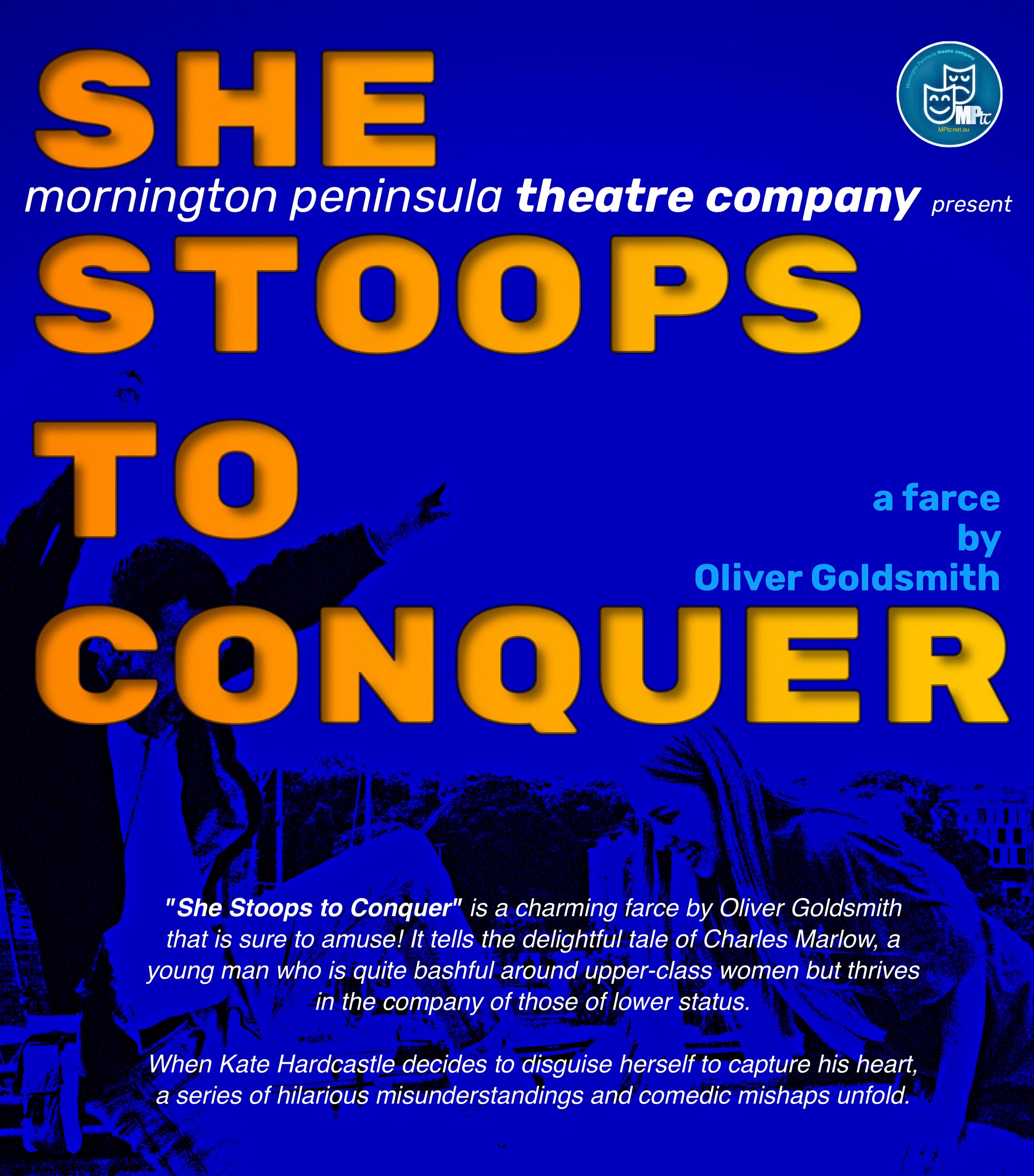
She Stoops to Conquer @ Balnarring
Between Friday 20 June 2025 and Sunday 22 June 2025
"She Stoops to Conquer" is a charming farce by Oliver Goldsmith that is sure to amuse! It tells the delightful tale of Charles Marlow, a young man who is quite bashful around upper-class women but thrives in the company of those of lower status. When Kate Hardcastle decides to disguise herself to capture his heart, a series of hilarious misunderstandings and comedic mishaps unfold.
Balnarring Community Hall

Twelfth Night @ The Briars
Between Thursday 20 February 2025 and Sunday 23 February 2025
Enjoy Shakespeare's immortal cross-dressing comedy of mistaken identity and twins lost at sea.
Homestead Lawn at The Briars

Much Ado About Nothing FLINDERS
Sunday 27 October 2024
Shakespeare's immortal comedy where true love runs straight - into trouble.
Presented in the round for a truly immersive theatre experience full of laughs and maybe even a tear or two.
Flinders Civic Hall

Much Ado About Nothing ROSEBUD (CANCELLED)
Saturday 26 October 2024
Shakespeare's immortal comedy where true love runs straight - into trouble.
Presented in the round for a truly immersive theatre experience full of laughs and maybe even a tear or two.
Rosebud Memorial Hall

Much Ado About Nothing MORNINGTON
Between Saturday 19 October 2024 and Sunday 20 October 2024
Shakespeare's immortal comedy where true love runs straight - into trouble.
Presented in the round for a truly immersive theatre experience full of laughs and maybe even a tear or two.
Peninsula Community Theatre

Much Ado About Nothing BALNARRING
Sunday 13 October 2024
Shakespeare's immortal comedy where true love runs straight - into trouble.
Presented in the round for a truly immersive theatre experience full of laughs and maybe even a tear or two.
Balnarring Hall

Much Ado About Nothing DROMANA
Saturday 12 October 2024
Shakespeare's immortal comedy where true love runs straight - into trouble.
Presented in the round for a truly immersive theatre experience full of laughs and maybe even a tear or two.
Dromana Community Hall

Much Ado About Nothing SEAFORD
Sunday 6 October 2024
Shakespeare's immortal comedy where true love runs straight - into trouble.
Presented in the round for a truly immersive theatre experience full of laughs and maybe even a tear or two.
Seaford Community Hall

Much Ado About Nothing RYE
Saturday 5 October 2024
Shakespeare's immortal comedy where true love runs straight - into trouble.
Presented in the round for a truly immersive theatre experience full of laughs and maybe even a tear or two.
Rye Civic Hall

Lady Windermere's Fan HASTINGS
Between Thursday 4 July 2024 and Saturday 6 July 2024
Beautiful, aristocratic, an adored wife and young mother, Lady Windermere is 'a fascinating puritan' whose severe moral code leads her to the brink of social suicide. The only one who can save her is the mysterious Mrs Erlynne whose scandalous relationship with Lord Windermere has prompted her fatal impulse. And Mrs Erlynne has a secret - a secret Lady windermere must never know if she is to retain her peace of mind.
Lady Windermre's Fan is presented in the round with unallocated seating. All seats have a great view.
Hastings Hall

Lady Windermere's Fan MORNINGTON
Between Thursday 27 June 2024 and Saturday 29 June 2024
Beautiful, aristocratic, an adored wife and young mother, Lady Windermere is 'a fascinating puritan' whose severe moral code leads her to the brink of social suicide. The only one who can save her is the mysterious Mrs Erlynne whose scandalous relationship with Lord Windermere has prompted her fatal impulse. And Mrs Erlynne has a secret - a secret Lady windermere must never know if she is to retain her peace of mind.
Lady Windermre's Fan is presented in the round with unallocated seating. All seats have a great view.
Peninsula Community Theatre

Lady Windermere's Fan RYE
Saturday 22 June 2024
Beautiful, aristocratic, an adored wife and young mother, Lady Windermere is 'a fascinating puritan' whose severe moral code leads her to the brink of social suicide. The only one who can save her is the mysterious Mrs Erlynne whose scandalous relationship with Lord Windermere has prompted her fatal impulse. And Mrs Erlynne has a secret - a secret Lady windermere must never know if she is to retain her peace of mind.
Lady Windermre's Fan is presented in the round with unallocated seating. All seats have a great view.
Rye Civic Hall

Lady Windermere's Fan DROMANA
Friday 21 June 2024
Beautiful, aristocratic, an adored wife and young mother, Lady Windermere is 'a fascinating puritan' whose severe moral code leads her to the brink of social suicide. The only one who can save her is the mysterious Mrs Erlynne whose scandalous relationship with Lord Windermere has prompted her fatal impulse. And Mrs Erlynne has a secret - a secret Lady windermere must never know if she is to retain her peace of mind.
Lady Windermre's Fan is presented in the round with unallocated seating. All seats have a great view.
Dromana Community Hall
