
Dine with Ted (Virtual Reality) 7.10.26
About
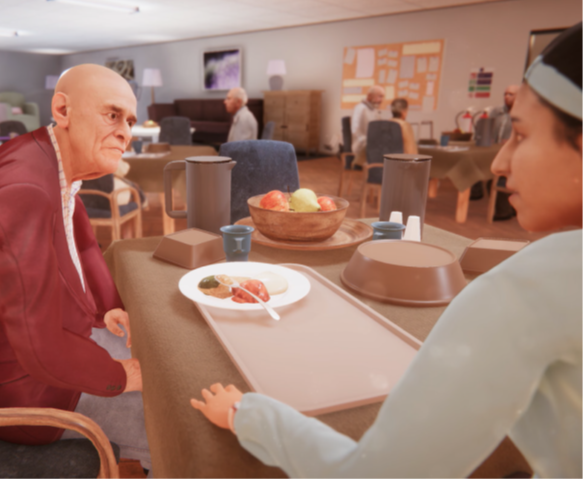
This program is provided by Dementia Australia. Please arrive 15 minutes early to register with Dementia AustraliaThis immersive experience is set in a dining area while a meal is being served. Using virtual reality and avatar technology, participants see the dining experience from two perspectives: as a care worker, and from the point of view of Ted, who is living with dementia.
Participants explore how food, environment and support can greatly influence the dining experience.
Benefits:
• Your workforce learns about some positive and negative impacts of the dining experience on a person living with dementia.
• Staff get practical ideas to improve the dining experience.
• Staff explore a problem-solving approach to assist with changed behaviours around dining.
Resources will be provided. No Catering - please BYO
Please wear comfortable clothing
Please ensure you read these carefully before enrolling in this workshop.
Use only when Unimpaired
A comfortable virtual reality experience requires an unimpaired sense of motion and balance. Do not use the headset when you are experiencing any of the following (as they may increase your susceptibility to adverse symptoms)
Tiredness or exhaustion; need sleep; under the influence of alcohol or drugs; hung-over; have digestive problems; under emotional stress or anxiety; suffering from cold/flu/headaches/migraines/earaches
Pre-Existing Medical Conditions
Consult with your doctor before using the headset if you pregnant, elderly, have pre-existing binocular vision abnormalities or psychiatric disorders, or suffer from a heart condition or other serious medical condition
Seizures
Some people (about 1 in 4,000) may have severe dizziness, seizures eye or muscle twitching, or blackouts triggered by light flashes or patterns. This may occur while they are watching TV, playing video games, or experiencing virtual reality, even if they have never had a seizure or blackout before or have no history of seizures or epilepsy. These symptoms arise more commonly in children and young people. Anyone who experiences any of these symptoms should stop use of the headset and see a doctor. If you previously have had a seizure, loss of awareness, or other symptom linked to an epileptic condition you should see a doctor before using the headset.
Interference with Medical Devices
The headset and controller may contain magnets or components that emit radio waves, which could affect the operation of nearby electronics, including cardiac pacemakers, hearing aids, and defibrillators. If you have a pacemaker or other implanted medical device, consult your doctor of the manufacturer of your medical device before using the headset or controllers. Maintain a safe distance between the headset and controller and your medical devices. Stop using the headset or controller if you observe a persistent interference with your medical device.
Date
Wednesday 7 October 2026 9:00 AM - 12:00 PM (UTC+10)Location

East Wimmera Health Service
Birchip Meeting Room, 26 Duncan St, BIRCHIP Victoria 3483

Contact Form
Dine with Ted (Virtual Reality) 7.10.26

Resend recently purchased tickets to our events to your email.
Enter email to start search
You can review the event organiser's terms and conditions here.