
Ancient Jewish Manuscripts and AI
About
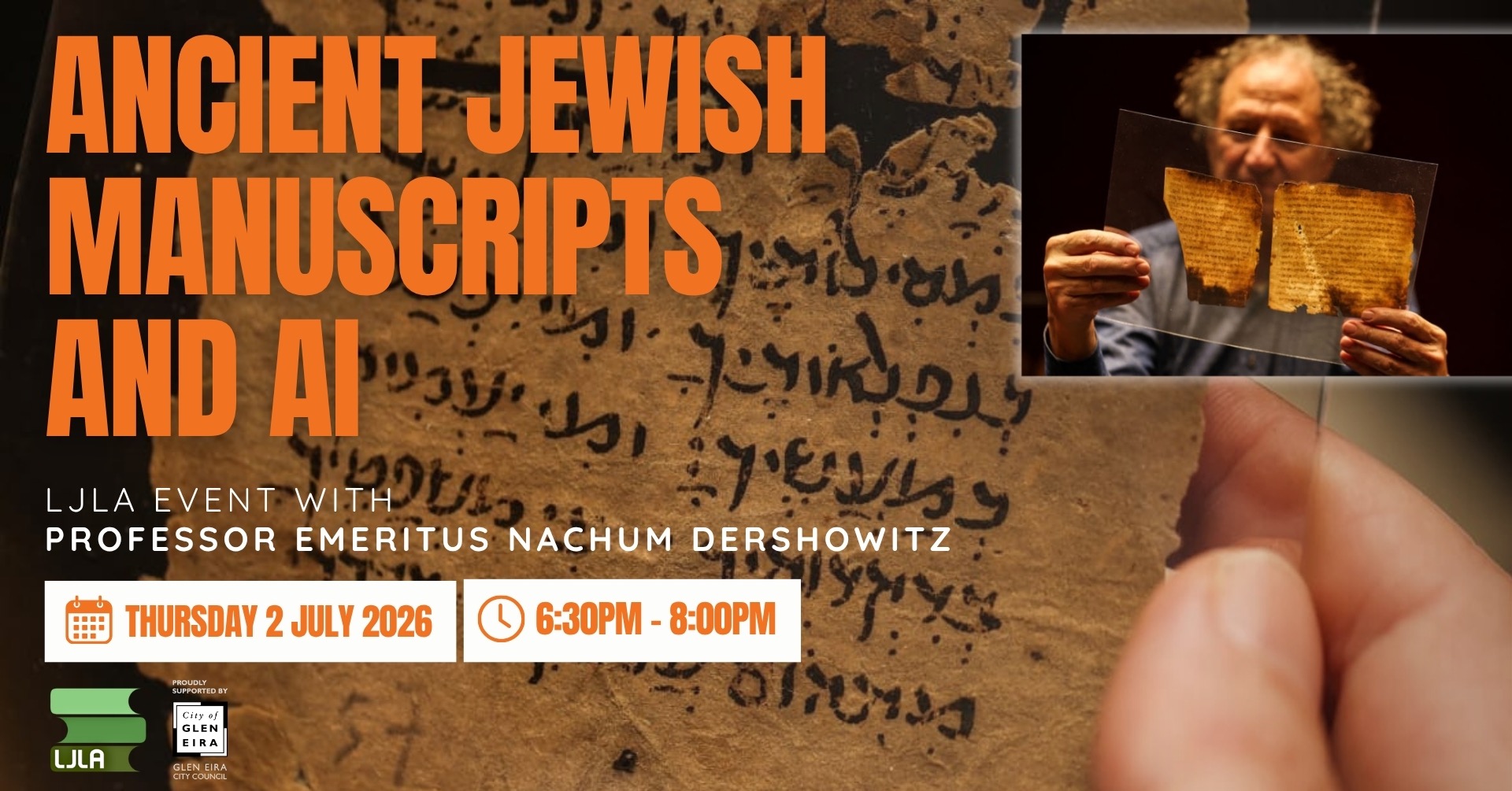
Professor Emeritus Nachum Dershowitz will present the significant recent advances that he and his colleagues have made in applying state-of-the-art artificial intelligence tools and methods to the study and analysis of tens of thousands of medieval Jewish manuscripts written in Hebrew script. Among these remarkable materials are the many fragments discovered more than a century ago in the Cairo Genizah — a vast treasure of Jewish history and culture. Many of these documents have now been digitised and made available online, opening exciting new possibilities for research, discovery, and analysis.
The MiDRASH project, of which Professor Dershowitz is a part, is based on the National Library of Israel’s digital database. The project is training AI systems to decipher handwritten texts in Hebrew, Arabic, Aramaic, and Yiddish. This groundbreaking technology enables scholars to cross-reference names and words, reconnect fragmented documents, and make these extraordinary historical materials more accessible to both researchers and the wider public.
Join us for a fascinating presentation exploring the intersection of ancient manuscripts, Jewish history, and cutting-edge artificial intelligence.
Nachum Dershowitz is Professor Emeritus of Computer Science and AI at Tel Aviv University, with graduate degrees from the Weizmann Institute. He is known for his research in computational humanities, computational health and computational logic, having authored over 200 research papers and several books. Recognition of his contributions include the Herbrand Award for Distinguished Contributions to Automated Reasoning, the Choice Outstanding Academic Title Award for the book, Calendrical Calculations, and election to Academia Europaea. He worked on the Responsa Project as a student, on the Friedberg Genizah Project, on Scripta Qumranica Electronica with the Israel Antiquities Authority, and currently is a principal investigator on the ERC-funded “MiDRASH” project to automatically transcribe and analyse medieval Hebrew manuscripts.

Contact Form

Resend recently purchased tickets to our events to your email.
Enter email to start search
You can review the event organiser's terms and conditions here.