
Christmas event planning guide
This guide walks you through how to plan a Christmas event from start to finish – covering venue booking, budgeting, theming, catering, entertainment, and promotion. It’s designed for anyone organising a school celebration, office party, or community fundraiser in Australia.
Christmas is one of the busiest event seasons of the year, and the competition for venues, caterers, and guests’ diaries is fierce. Whether you’re organising a school end-of-year celebration, an office Christmas party, or a community fundraiser, this guide walks you through everything from setting a date to promoting your event.
Who is my Christmas event for?
Before you book anything, spend a few minutes thinking about who the event is for. The answers will shape nearly every other decision you make.
Ask yourself: what did people enjoy last time? What didn’t work? Are there attendees with dietary requirements, accessibility needs, or young children in tow? Is the event family-friendly, adults-only, or a mix?
If you’ve run a similar event before, reach out to a few regular attendees and ask what they’d want more of. A simple survey or a quick email takes minutes and saves you from guessing.
For catered events, collect dietary requirements early – not as an afterthought on the night. Custom form fields on your booking page make this easy to do at the point of ticket purchase, so catering orders are based on real numbers rather than estimates.

How early should I book a Christmas event venue?
Christmas venues book out quickly. If you have a specific venue in mind, contact them as soon as you have a rough date range in mind – even if you’re still working out the finer details.
When comparing venues, consider:
- Capacity – enough space for your expected numbers without feeling empty or overcrowded
- Availability – does it align with your preferred date?
- Facilities – is there a stage, a dance floor, a kitchen, a PA system?
- Accessibility – is the space accessible to all guests, including those with mobility needs?
- Transport – is there parking? Is it close to public transport?
- Cost – what’s included? Are there mandatory catering minimums or hire fees for equipment?
- Noise restrictions – for venues in residential areas, what time must music stop?
Once you’ve confirmed the venue, set your date. If you’re targeting a particular audience – families with school-aged children, university students, a corporate group – factor in school holidays, end-of-year schedules, and competing events when choosing the date and start time.
What budget do I need for a Christmas event?
A budget set early prevents overspending later. Work out how much money you have available (from ticket sales, organisational funds, sponsorship, or a combination), then divide it across your main cost categories.
For most Christmas events, the biggest line items are:
- Venue hire – often the largest single cost
- Catering – food and drinks, whether in-house or via an external caterer
- Entertainment – a DJ, live band, comedian, or other performer
- Decorations – props, lighting, table settings
- Staffing and volunteers – for larger events, consider whether you need paid staff or security
Price your tickets based on what you need to cover costs, with a margin for contingency. If entertainment and caterers are going to be booked separately, get quotes before setting your ticket price – not after.
One practical note: professional caterers and performers book out over the Christmas period just as quickly as venues do. If you’ve set your date, get enquiries out early.

What are the best Christmas event themes?
A clear theme makes the event more fun to attend and easier to plan. It gives guests something to dress to, helps guide decoration choices, and makes the event more memorable.
Popular Christmas event themes include:
- Ugly Christmas jumper – a classic that works for offices, community groups, and school fundraisers alike
- Winter wonderland – white, silver, and blue tones; ice sculptures and fairy lights; works particularly well for evening events
- Christmas around the world – a multicultural take that celebrates different traditions
- Grinch or Elf themes – playful and well-suited to family or mixed-age events
- Classic Christmas – traditional red and green, carols, and a formal dinner format
- Retro Christmas – themed around a particular decade’s aesthetic, popular with adult groups
Once the theme is set, entertainment, food, and decorations can all follow from it. A cohesive theme creates atmosphere without requiring a large budget – the consistency does the work.
What food, drinks, and entertainment should I organise?
Food and drink choices should reflect both your theme and your audience. For a catered dinner, work with your caterer on a menu that fits your theme and collects any dietary requirements in advance. For a more casual party, finger food and grazing tables work well and are easier to manage.
Entertainment options that tend to work at Christmas events:
- Live band or DJ – suits most adult and mixed-age events; confirm sound level restrictions with the venue
- Christmas trivia – works well as an icebreaker or standalone activity for corporate or community groups
- Photo booth – a popular addition for any event format; props themed to your event make it feel custom
- Karaoke – suits informal parties; check whether the venue has equipment or whether you’ll need to hire
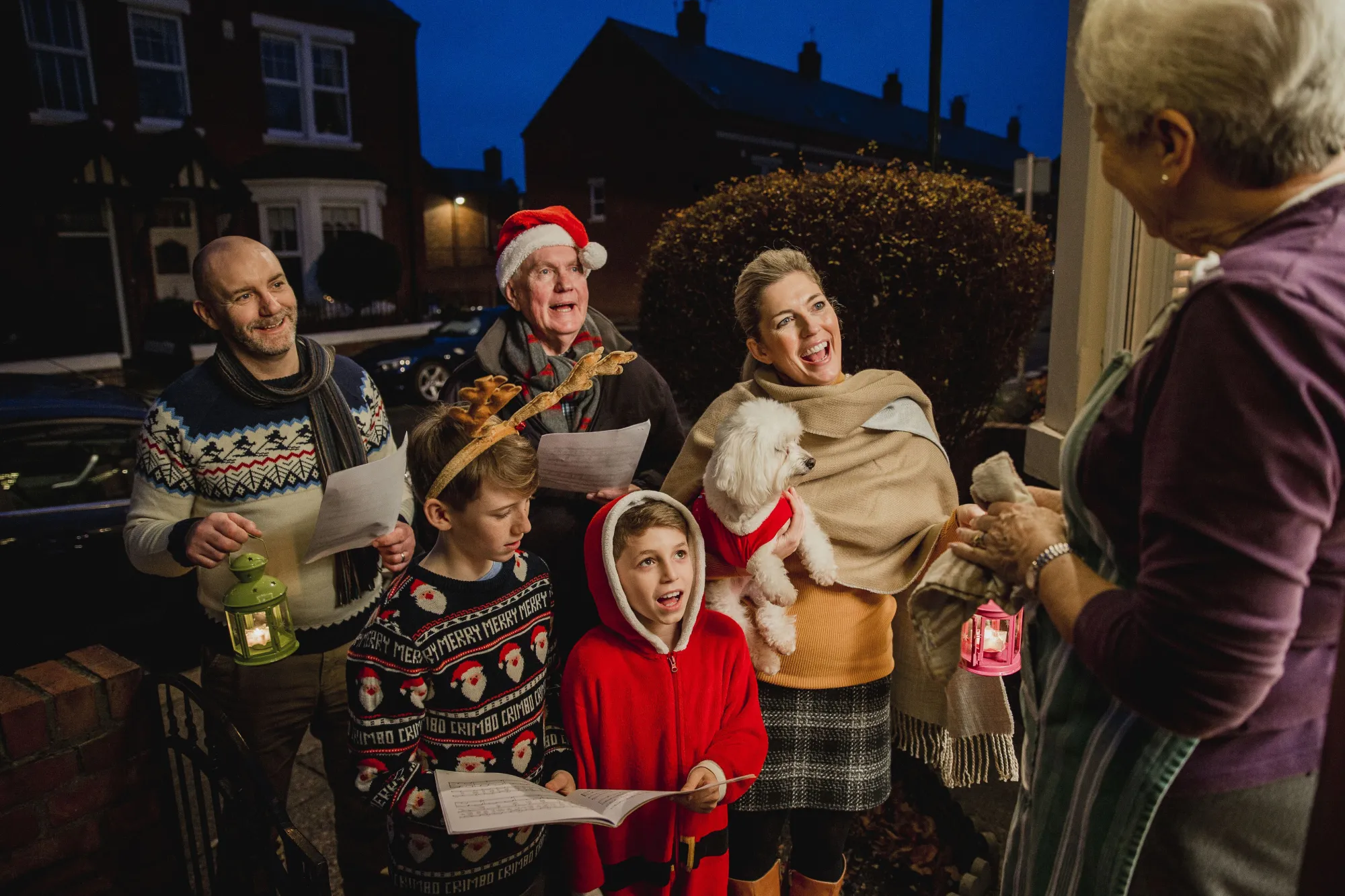
- Carol choir or vocalist – suits school events, community celebrations, and more formal dinner formats
- Secret Santa or white elephant gift exchange – works especially well for workplace events; communicate the gift budget clearly in advance
For children’s events, add activities such as a craft station, a visit from Santa, or a face painter. For mixed-age events, plan a programme that keeps both children and adults engaged without one group waiting around for the other.
How do I create a run sheet for a Christmas event?
A Christmas event without a run sheet often runs late, which affects the mood, the catering timing, and the entertainment. Write a run sheet that maps out the evening from arrival through to the last activity.
Key moments to anchor in the schedule:
- Doors open and guest arrival
- Welcome or opening remarks (if any)
- Food service – whether that’s a sit-down meal, a buffet opening, or canapé rounds
- Entertainment start and finish
- Any formal element (awards, speeches, Secret Santa)
- Last drinks / music-off time
- End of event and guest departure
Share the run sheet with your venue, caterer, and entertainment at least a week before the event. Walk through the venue setup and confirm arrangements with each supplier in the days leading up.
How do I promote my Christmas event?
For most Christmas events, promotion should start six to eight weeks out – earlier if you’re expecting a large turnout or have a competitive audience (offices managing competing Christmas party invitations, for example).
Effective channels for Christmas events:
- Email to your existing contact list, especially if you’ve run similar events before
- A designed flyer or digital graphic for sharing in relevant community groups, newsletters, and social media
- School newsletters or intranet posts for school and workplace events
- Word of mouth – encourage early ticket purchasers to share the event with their networks
Your promotion should clearly communicate the date, time, venue, ticket price, theme (and dress expectations), and how to buy tickets. If the event has age restrictions or is adults-only, state that clearly upfront.
How can TryBooking help with my Christmas event?
TryBooking handles ticketing, dietary and RSVP data collection, and guest communications in one place. You can set up your event page with custom branding that matches your theme, create multiple ticket types (early bird, general admission, family packs, tables), and collect dietary requirements or costume preferences through custom form fields at the point of booking. Guest communications – confirmation emails, reminders, and event updates – go out automatically or can be sent manually to all registrants.
If you’re running a fundraising element alongside tickets (a raffle, a donation option, or a gold coin collection), that can be added to the same booking page.
Frequently asked questions
How far in advance should I plan a Christmas event?
Start planning at least 8-10 weeks out for a simple gathering, or 3-4 months for a large-scale event with catering and entertainment. Book your venue first – popular spaces fill up from September. Send save-the-dates 6 weeks before and formal invitations 3-4 weeks out. Caterers and entertainment should be locked in at least 6 weeks ahead, as the Christmas period is peak season for both.
What’s a good budget for a community Christmas event?
For a 100-person community event, budget $1,500-$3,000 for venue hire, $800-$1,500 for catering, $200-$500 for decorations, and $300-$800 for entertainment. Offset costs with ticket sales, sponsorship from local businesses, or a gold coin donation at the door. School events tend to run cheaper if parents volunteer and the school hall is used as the venue.
Do I need a permit for a Christmas event in a public park?
In most Australian states, yes. Contact your local council 6-8 weeks before the event. You’ll typically need public liability insurance ($10-20 million), a site plan, and details about expected attendance, noise, and waste management. Requirements vary by council, so check early. Events with amplified music, food sales, or temporary structures may have additional requirements.
How do I handle dietary requirements at a Christmas event?
Collect dietary information at the point of ticket purchase or registration – not on the night. A custom form field on your booking page asking about allergies, vegetarian/vegan needs, and other dietary requirements gives your caterer accurate numbers to work with. For buffet or grazing events, clearly label all dishes with common allergens. Always include at least one substantial vegetarian and one gluten-free option.