Diwali event ideas
This guide covers 12+ Diwali event ideas for Australian organisers – from large community festivals with dance and fireworks to intimate workplace celebrations and school programs. Each idea includes cultural context and practical planning advice.
Diwali is one of the most significant festivals in the world – celebrated by Hindu, Sikh and Jain communities across India and in the diaspora, including hundreds of thousands of people in Australia. If you’re planning an event to mark the occasion, this guide covers how to do it thoughtfully, from understanding what the festival means to different communities through to practical ideas for events of any scale.
What does Diwali mean and why does it matter?
The word Diwali comes from the Sanskrit dipavali, meaning “row of lights.” The festival runs across five days in autumn (in the Northern Hemisphere), with the main night falling on the new moon of the Hindu lunar month of Kartika.
What Diwali celebrates differs depending on the community observing it.
For Hindu communities, the festival holds multiple regional meanings. Across much of India, it marks the return of the god-king Rama to Ayodhya after fourteen years of exile, with lamps lit to welcome him home. In other regions, it celebrates Krishna’s victory over the demon Narakasura, freeing thousands held captive. Across all Hindu traditions, Diwali is also the time to honour Lakshmi, the goddess of fortune, prosperity and light – diyas are lit in homes and temples to invite her presence for the coming year.
For Jain communities, Diwali commemorates the attainment of moksha – liberation from the cycle of birth and death – by Mahavira, the 24th and most recent Tirthankara (enlightened teacher) in the Jain tradition. According to Jain texts, this occurred in 527 BCE, and the tradition of lighting lamps to symbolise his spiritual light began on that day.
For Sikh communities, the day is observed as Bandi Chhor Divas – “the day of liberation.” It marks the release of Guru Hargobind, the sixth Sikh Guru, from imprisonment in Gwalior Fort under the Mughal emperor Jahangir. His return to Amritsar coincided with Diwali and was celebrated with the lighting of the Golden Temple.
Understanding these distinctions matters when you’re planning an event. A community festival in a predominantly Gujarati Hindu area will have a different cultural texture from one in a Punjabi Sikh community. If you’re working with a specific community group to co-organise an event, take the time to understand what Diwali means to them.
How do I plan a community Diwali festival?
Large-scale Diwali festivals are held in most Australian cities, often organised by Indian community associations, Hindu councils or multicultural councils in partnership with local governments. If you’re involved in organising one, here’s what makes them work.
Cultural performances are the centrepiece of most community Diwali events. Classical Indian dance forms – Bharatanatyam, Kathak, Odissi, Garba, Bhangra – each come from different regions and traditions. Work with local Indian arts organisations to identify performers, and be clear about your audience, purpose and budget when you approach them. Pay performers fairly.
Rangoli – intricate patterns made with coloured powders, rice flour or flower petals – is one of the most visually distinctive elements of Diwali. Consider a rangoli competition as a feature activity, or commission artists to create large-scale rangoli installations as part of the event design. These also make excellent photo opportunities that attendees share organically.
Bazaars and markets create space for Indian-owned businesses and artisans – clothing, jewellery, handcrafted goods, food, spices. A well-curated market gives community members a reason to stay for hours and provides a platform for local small businesses.
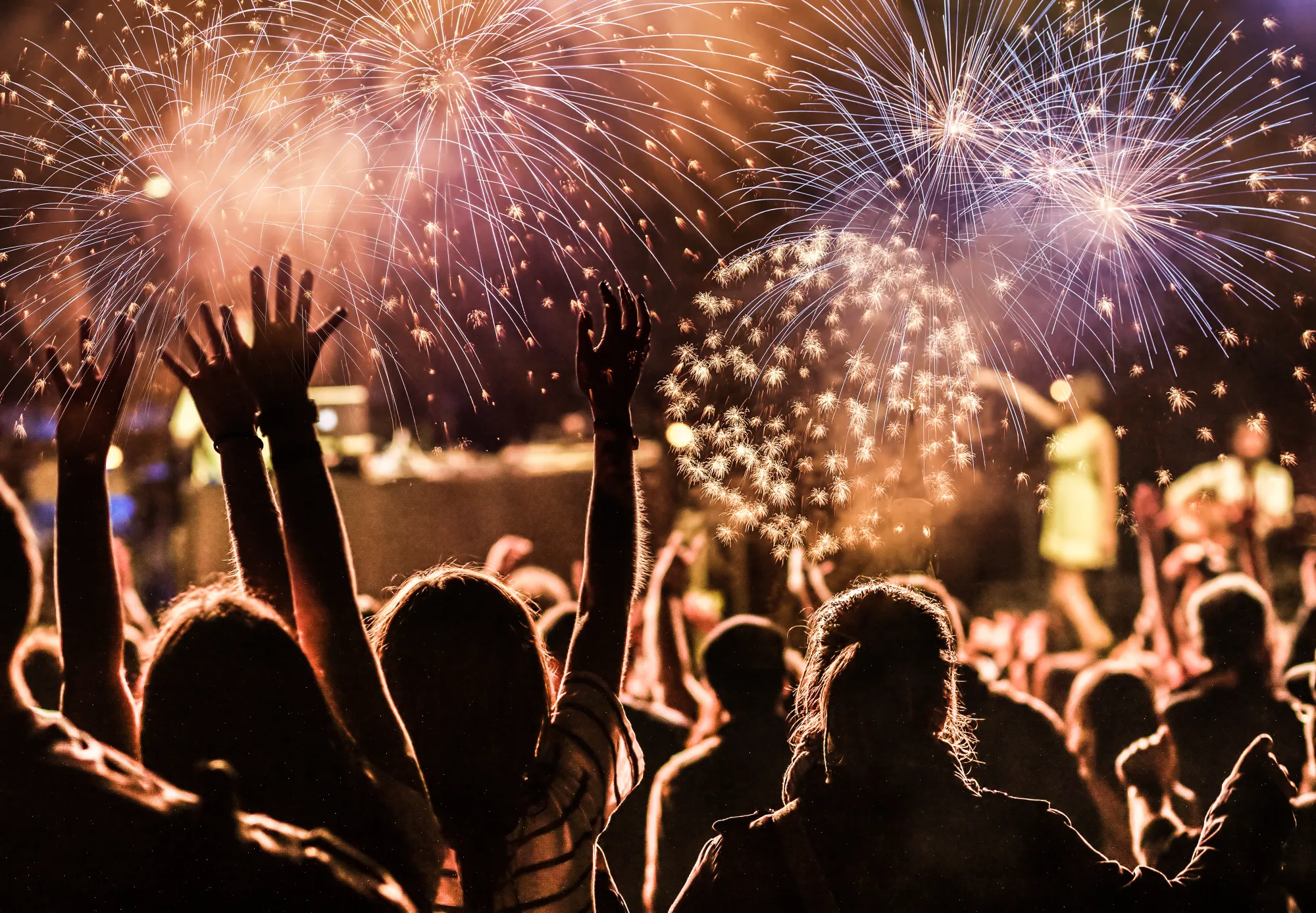
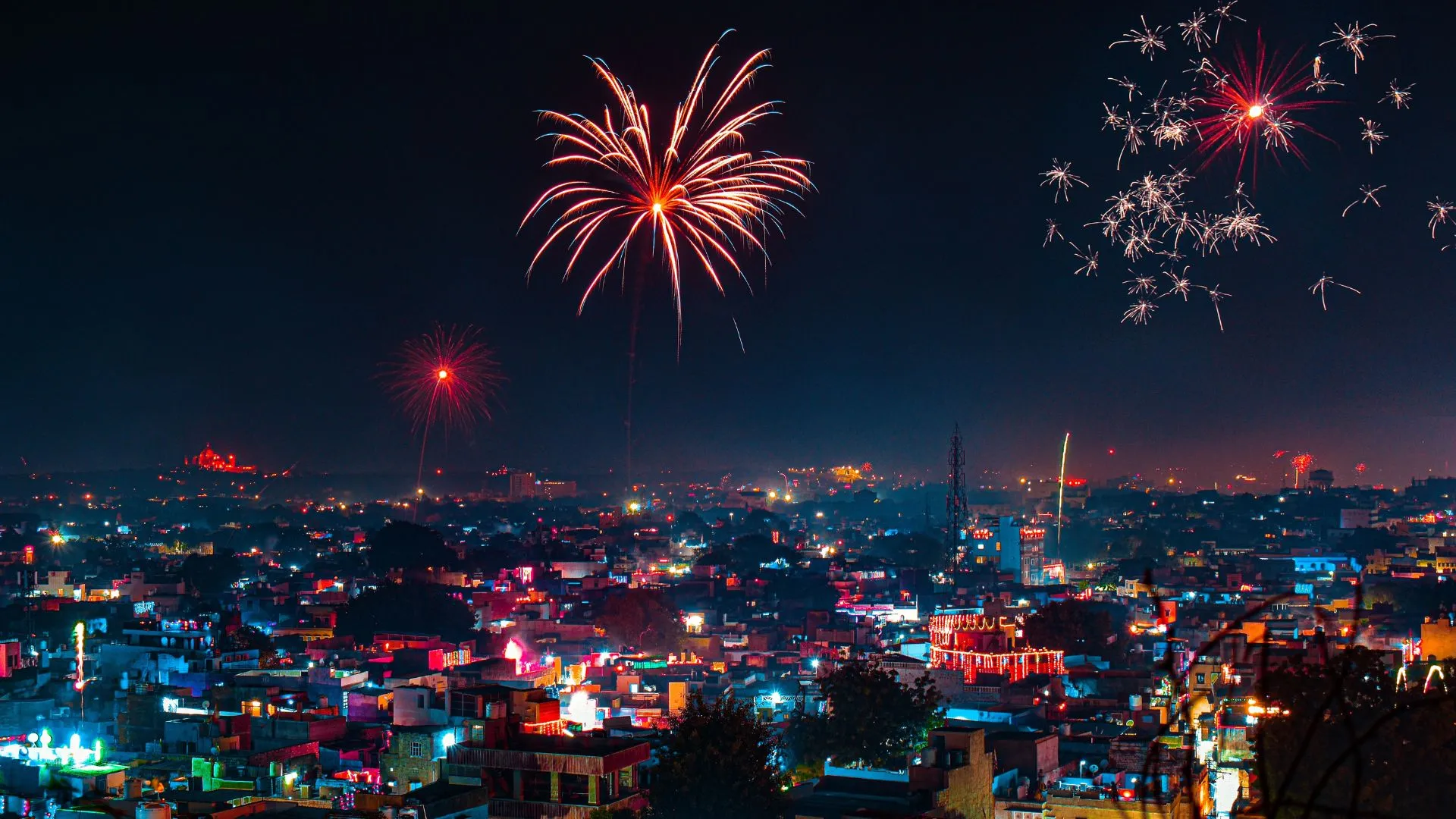
Fireworks or light displays are strongly associated with Diwali’s victory-of-light symbolism. If your venue permits it, an evening fireworks display brings the festival to a natural close. Check your council’s requirements for permits and noise cutoffs.
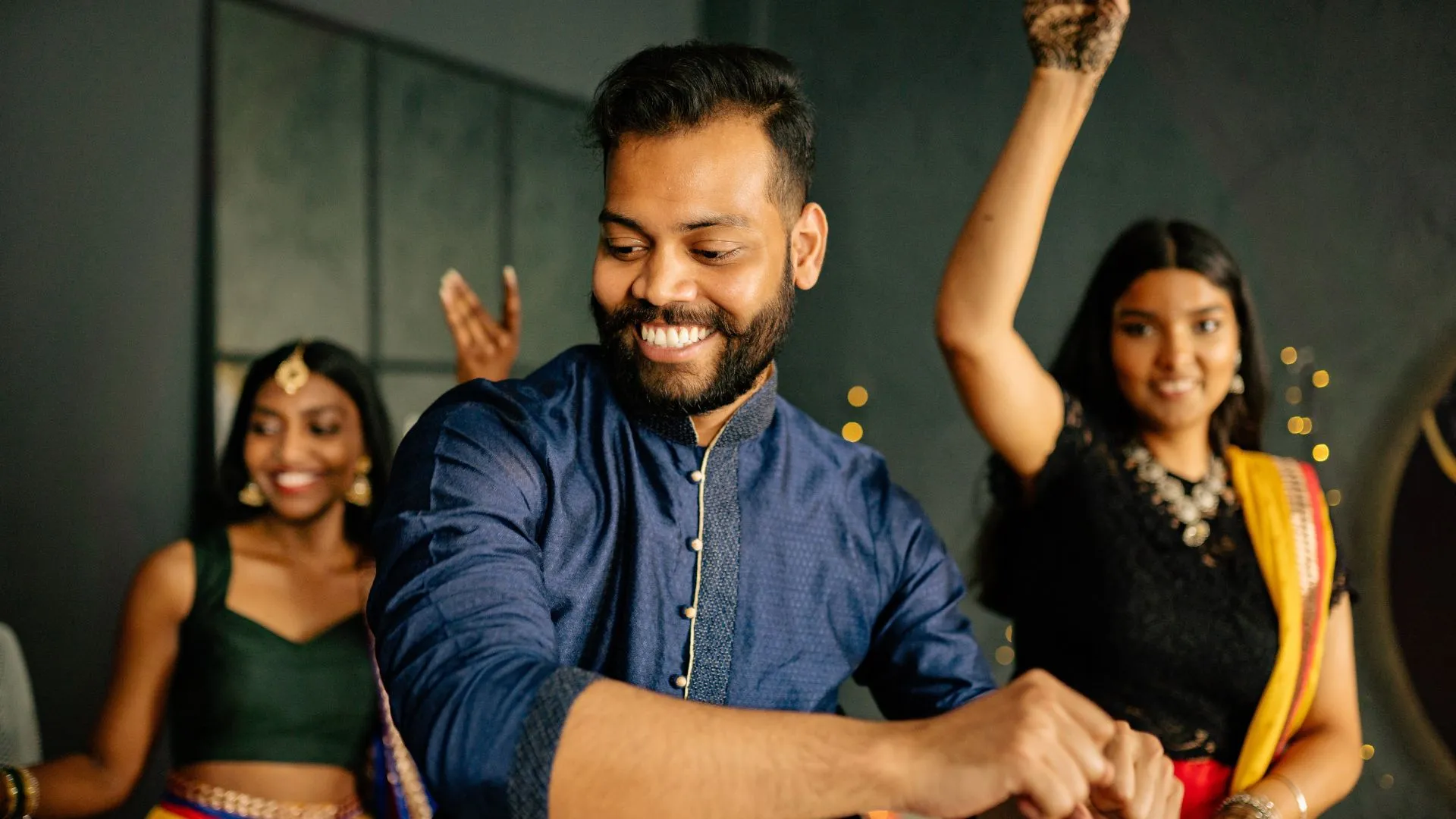
What Diwali events work for workplaces, schools, and smaller groups?
Not every Diwali event needs a main stage and a crowd of thousands. Smaller events can be more intimate and, done well, more genuinely meaningful.
Workplace celebrations – A Diwali morning tea or lunch is a low-effort, high-impact way to mark the occasion. Invite team members to bring dishes – sweets and savoury snacks are both part of Diwali traditions. If you have Indian colleagues who celebrate the festival, ask whether they’d like to share something about what it means to them; don’t put people on the spot, but many will welcome the opportunity. A diya-making or rangoli activity can work well as a team event, especially if led by someone with cultural knowledge.
School programs – Diwali is an excellent opportunity for cultural learning in schools. A session explaining what the festival means to different faiths and regions – presented ideally by a parent or community member who celebrates it – is more valuable than surface-level craft activities. If you do run craft activities, ensure they’re culturally grounded: explaining what a diya represents while students decorate one is very different from using decorative elements as generic art materials.
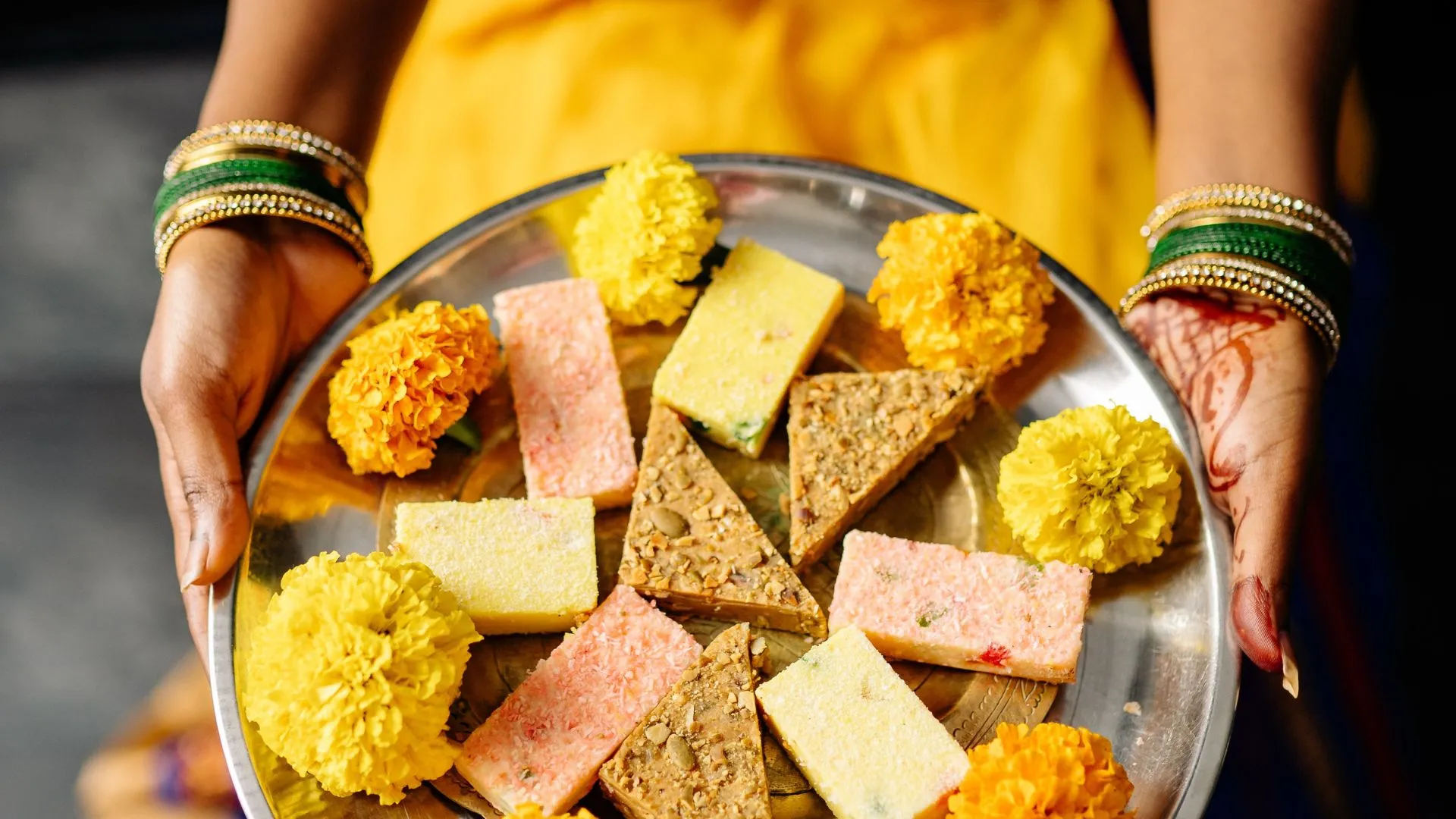
Community dinners – A ticketed Diwali dinner is a popular fundraiser for Indian community associations, temples and cultural organisations. These events typically include a shared meal, cultural performances, and a structured program. A photo booth area, mehndi (henna) station and a dessert table of traditional mithai (sweets) are common features.
What food and sweets should I serve at a Diwali event?
Food is central to Diwali celebrations, and sweet-making in particular is a significant tradition – families and communities prepare and exchange mithai (sweets) as gifts.
Classic Diwali sweets include gulab jamun, jalebi, barfi, laddoo and halwa. For a community event, consider working with an Indian caterer or bakery to supply an authentic spread. For a smaller workplace event, a dessert table of Indian sweets is a straightforward and memorable gesture.
Savoury snacks – samosas, pakoras, chaat – work well for cocktail-style events. A sit-down dinner typically features biryani, aromatic curries, fresh breads (roti or naan) and fragrant basmati rice.
If you’re taking dietary requirements, note that many Hindu communities are vegetarian, and some Jain communities observe additional dietary restrictions during festival periods. Use your booking form to collect this information before the event.
How do I decorate for a Diwali event?
Diwali’s visual identity is warm, luminous and detailed. A few elements that translate well to events of any size:
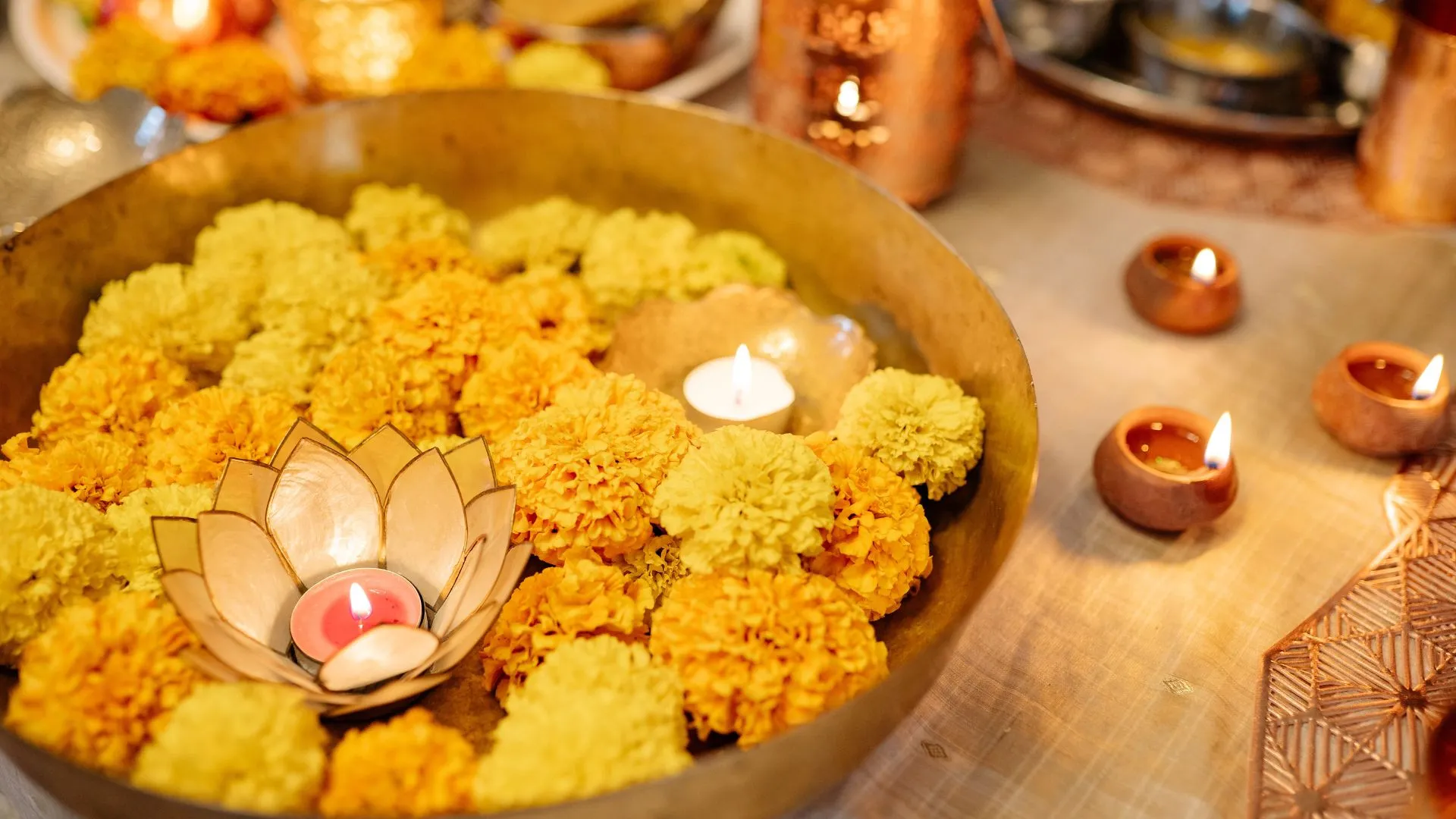
Diyas – small clay oil lamps – are the defining symbol of the festival. Rows of lit diyas along pathways, windowsills or table centres create an immediate atmosphere. Battery-operated versions are practical for indoor venues with fire restrictions.
String lights and lanterns create the same warm glow at larger scale. Paper lanterns in rich reds, golds and oranges work well for outdoor events.
Marigold garlands (torans) are traditional door decorations and can be used to frame entry points or stage areas.
Table centrepieces combining diyas, marigolds and rangoli patterns are simple to prepare and visually striking.

How do I ensure cultural sensitivity at a Diwali event?
Diwali is a living religious and cultural tradition, not an aesthetic. If your organisation isn’t part of the communities that celebrate it, the goal is to honour the occasion rather than borrow its visuals for a generic party.
The best Diwali events are co-designed with community – with Indian community associations, temple committees, or community members who can help shape the program. If you’re an organisation running an event for a predominantly non-Indian audience, partner with a community group from the outset rather than adding a cultural element at the end.
Avoid framing that treats the festival as a “theme” – Diwali as backdrop for a party is a different thing from an event that genuinely celebrates what the day means.
How can TryBooking help with my Diwali event?
Whether you’re running a ticketed community festival, a fundraising dinner or a free workplace celebration that needs registrations, TryBooking makes it straightforward to set up your event and manage bookings. You can use custom forms to collect dietary requirements – particularly useful for Diwali events where vegetarian and other dietary preferences are common. Free events are genuinely free on TryBooking, with no fees charged to attendees.
Frequently asked questions
When is Diwali in 2026?
Diwali 2026 falls on Thursday 8 October, with the five-day festival running from 6-10 October. The main night of celebrations (Lakshmi Puja) is on the new moon, which is 8 October. If you’re planning a community event, the main night and the weekend closest to it are when the largest gatherings typically occur.
Is it appropriate for a non-Indian organisation to host a Diwali event?
Yes, provided the event is co-designed with community. Partner with an Indian community association, temple committee, or community members who can shape the program from the outset. The goal is to create space for Indian community voices to be central, not to use Diwali as a theme for a generic party. Events that involve community in the planning process produce better outcomes and build genuine relationships.
Do I need fireworks for a Diwali event?
Fireworks are strongly associated with Diwali but aren’t essential. A light display using diyas, string lights, and lanterns captures the festival’s symbolism of light without the logistics and cost of pyrotechnics. If you do plan fireworks, you’ll need a licensed pyrotechnician, council approval, public liability insurance, and to comply with your state’s fireworks regulations. Check noise curfews and fire danger ratings, especially in October when fire risk can be elevated in parts of Australia.
What dietary requirements should I plan for at a Diwali event?
Many Hindu attendees are vegetarian, and some Jain communities observe additional dietary restrictions during festival periods – avoiding root vegetables, certain grains, or food prepared after sunset. Always include substantial vegetarian options and collect specific dietary requirements through your booking form. If working with an Indian caterer, they’ll be familiar with these requirements. Vegan and gluten-free options should also be available for broader dietary needs.