Event security and safety guide
Running a safe event isn’t just about having security personnel at the door. It requires planning well before the day: the right permits, the right insurance, clear communication with attendees, and a team that knows what to do when something goes wrong. This guide covers the key elements of event safety in a UK context, including the counter-terrorism duties introduced by Martyn’s Law.
What should my event terms and conditions cover?
Strong terms and conditions protect both you and your attendees. They set out what’s expected of everyone, and they provide a documented framework to refer back to if something is disputed.
What your terms and conditions should cover:
Cancellation and refund policy – Be explicit about whether you offer refunds, under what circumstances, and how they’ll be processed. Ticket sales for a specific dated event generally fall outside the standard 14-day cancellation right that applies to most online purchases – but under the Consumer Rights Act 2015, if your event is cancelled, postponed, or materially changed, your ticket buyers are entitled to a remedy, either a refund or an alternative date. A “no refunds” clause doesn’t override this; sellers can’t contract out of statutory consumer rights.
Data privacy – If you’re collecting personal information from ticket buyers, you must comply with the UK GDPR and the Data Protection Act 2018. Your terms and conditions should include a reference to your privacy policy, or clearly explain how you’ll handle attendee data. The Information Commissioner’s Office (ICO) publishes guidance on what’s required.
Conduct expectations – For events where behaviour standards matter (events involving children, licensed venues, competitive sports), clearly state what’s expected and what the consequences of non-compliance are.
Keep your terms concise. A five-page document nobody reads provides less protection than a well-written one-page summary.

Event insurance: what you need and why
Insurance is one of the most important investments you’ll make as an event organiser. The question isn’t whether you need it – it’s which types you need and at what coverage levels.
Public liability insurance
Public liability insurance covers you if someone is injured or their property is damaged at your event as a result of your actions or negligence. While it isn’t a blanket legal requirement for events in the UK, it’s effectively mandatory in practice:
- Most councils require proof of public liability insurance as a condition of approving events on public land. A coverage level of £5 million to £10 million is commonly asked for.
- Venues almost universally require it as part of their venue hire agreement.
- Any event with significant public attendance carries real risk, and the cost of an uninsured liability claim can be catastrophic.
Get a certificate of insurance before your event and keep it accessible. You’ll often be asked to provide it.
Event cancellation insurance
Event cancellation insurance protects your investment if you have to cancel, postpone, or abandon the event due to circumstances outside your control: extreme weather, venue failure, a key performer pulling out, or a public emergency. It can cover the costs you’ve already incurred and, in some policies, anticipated revenue.
This type of insurance is particularly relevant for outdoor events and events that rely on a specific headline act or speaker. Secure it as early as possible – the closer you get to the event date, the harder (and more expensive) it becomes to obtain.
Property insurance
If you’re hiring or owning equipment – AV systems, staging, generators, marquees – property insurance covers damage, theft, or destruction of that equipment during the event period. Review whether your existing contents or business insurance extends to hired equipment or off-site use.
Employers’ liability insurance
If you’re paying staff or engaging contractors for your event, employers’ liability insurance is a legal requirement under the Employers’ Liability (Compulsory Insurance) Act 1969 the moment you have anyone working for you as an employee – even a casual hired for a single shift. The legal minimum is £5 million, though most policies provide £10 million as standard. Check whether cover extends to volunteers, since standard policies often don’t – a separate voluntary workers policy may be needed.
Hazardous activities
Events involving inherently risky activities – motorsport, extreme sports, performances with pyrotechnics, aerial acts, water activities – require specific additional coverage. Standard public liability policies typically exclude these activities or impose conditions that must be met. Speak with an insurance broker who specialises in events before you commit to any activity that carries elevated risk.
What are my duties under Martyn’s Law?
Martyn’s Law – officially the Terrorism (Protection of Premises) Act 2025 – introduces new counter-terrorism duties for certain premises and events, named after Martyn Hett, who was killed in the 2017 Manchester Arena attack. It received Royal Assent in April 2025, with an implementation period before enforcement begins.
Whether the duty applies to your event depends on how many people it’s reasonable to expect at the same time:
- Under 200 people – the premises or event is out of scope; the duties don’t apply.
- Standard tier (200–799 people) – you need basic, low-cost procedures: staff training on what to do in an attack, and a documented plan for invacuation, evacuation, lockdown, and communication.
- Enhanced tier (800 or more people) – you need a more thorough, documented approach, including a named senior individual responsible for security, a written security plan, and evaluation of physical security measures.
Responsibility for compliance typically sits with whoever controls the premises – which may be the venue, or may be you as the event organiser, depending on your hire agreement. If you’re running a qualifying event at a third-party venue, confirm in writing who owns the Martyn’s Law duty for that event. The Security Industry Authority (SIA) has been given responsibility for regulating compliance.
Even though full enforcement isn’t immediate, it’s worth reviewing your event’s likely capacity now and starting conversations with your venue about what’s expected, particularly if you’re planning recurring events that will still be running once the duties take effect.
What council permits and approvals do I need for my event?
The permit requirements for events in the UK are set by local councils and national regulators, and they vary by location, event size, and event type. Start the approvals process earlier than you think you need to.
Common approvals required:
Council event permit or notification – Required for most events on public land (parks, streets, beaches, squares) and for some private venues hosting large-scale public events. Many councils ask for a detailed event management plan as part of the application, covering crowd management, waste, traffic, and emergency response. Allow several weeks to a few months, depending on event complexity.
Food business registration – If you’re preparing or selling food at your event, you may need to register with your local council’s environmental health team under UK food law, generally at least 28 days before you start trading. One-off, occasional stalls – a school fete cake stall or a charity coffee morning – are often exempt, but check with your council, since the rules depend on how the food is prepared and how often.
Alcohol licence – Events where alcohol is sold or supplied need authorisation under the Licensing Act 2003. For a one-off or occasional event, a Temporary Event Notice (TEN) is usually the right route: it covers events of under 500 people, and a standard TEN must be given to the licensing authority at least 10 working days before the event (a late TEN, allowed only in limited circumstances, needs at least 5 working days). Larger or recurring events may need a full premises licence instead, which takes longer to process.
Temporary structure permits – Stages, scaffolding, temporary grandstands, and large marquees may need sign-off from your council’s building control team. Structural safety expectations for temporary demountable structures at events are set out in guidance such as The Purple Guide, alongside relevant British Standards.
Traffic management and road closures – If your event requires roads to be closed or traffic flow altered, you need a Traffic Regulation Order from the local highway authority, and you should notify the police well in advance. A traffic management plan prepared by a suitably qualified person is usually required.
Noise management – Amplified music at outdoor events is subject to noise limits, typically set as a condition of your licence or managed under statutory nuisance rules by your council’s environmental health team. Check both before confirming your event programme.
Fireworks and pyrotechnics – Professional firework and pyrotechnic displays must be run by a licensed, competent operator and comply with HSE guidance and manufacturer safety standards. Notify your local authority and fire and rescue service in advance, and check Civil Aviation Authority guidance if your display could affect nearby airspace.
If you’re running an event at an established venue – a function centre, a sports ground, a licensed theatre – the venue will typically have many of these approvals in place. Confirm specifically what their approvals cover and what you’ll need to arrange independently.
How do I manage crowd safety on the day?
The size and nature of your event determines the appropriate level of crowd management. But all events – even small ones – benefit from having a clear plan.
For smaller events (under 500 people): A volunteer-run check-in process with clear queue management is usually sufficient. Designate at least one person as a safety coordinator who knows the venue’s emergency exits and procedures. Ensure all team members know how to contact emergency services and where the first aid kit is.
For medium to large events: You’ll likely need licensed security personnel. Anyone working as a door supervisor or in a frontline security role at a licensed event needs an SIA licence issued by the Security Industry Authority; working without one is a criminal offence. Confirm your security provider’s staff hold current licences for the type of work they’ll be doing.
Work with your security provider to develop a crowd management plan, drawing on industry guidance such as The Purple Guide (the standard UK reference for event health, safety and welfare), that covers:
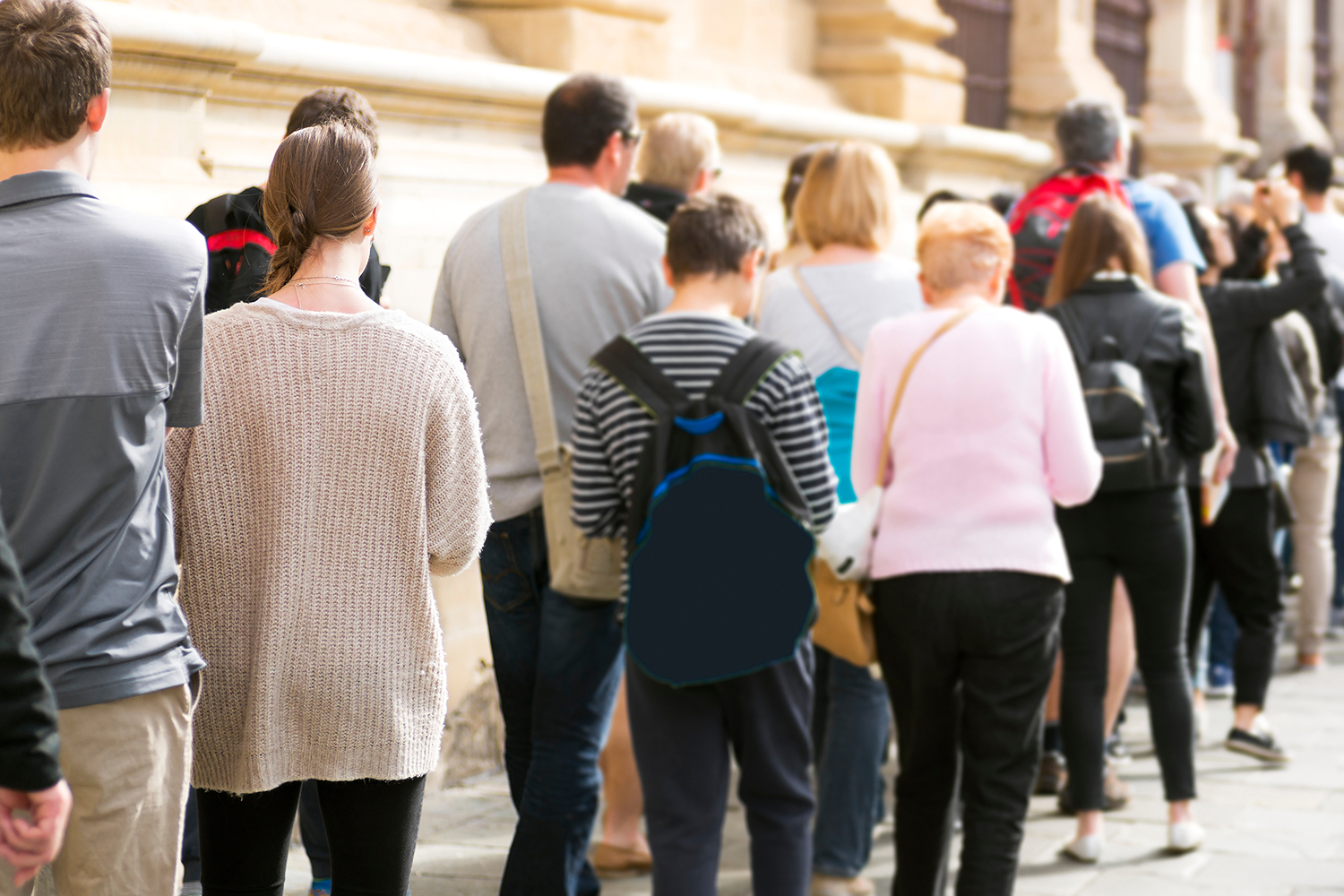
- Entry and exit flow to prevent bottlenecks
- Queue management to keep wait times short
- Response to unruly behaviour
- Evacuation procedures
- Communication protocols with emergency services
Coordinate with local emergency services. For events over 1,000 people, or events with elevated risk, it’s worth contacting your local police, fire and rescue service, and ambulance trust in advance. They can review your plans, advise on any concerns, and ensure they’re aware your event is happening.
First aid – For any event with significant attendance, engage a first aid provider or ensure qualified first aid personnel are present. St John Ambulance and the British Red Cross both offer event first aid services. The Purple Guide sets out a widely used method for calculating how much first aid provision an event of your size and risk profile needs.
How should I communicate safety information to attendees?
Clear communication with your attendees significantly reduces the likelihood of incidents and the severity of those that do occur.
Before the event: Send attendees the information they need to arrive safely and prepared. This includes entry requirements (tickets, ID, proof of age), any access restrictions, parking details, and any safety-relevant information specific to the event (sun safety for outdoor summer events, wet-weather contingencies, what to do if they feel unwell).
On the day: Use multiple channels for real-time communication. Clear signage, staff who can answer questions, and a public address system for larger events ensure information reaches attendees when they need it. Social media and SMS updates are increasingly expected for larger public events.
If something changes on the day – a venue change, a weather delay, an emergency – communicate quickly and calmly. Attendees who receive clear, honest information are far easier to manage than those left without information.
How do I protect attendee data and cyber security?
If your event uses online ticketing, registration platforms, or any system that handles personal data, you have obligations under the UK GDPR and the Data Protection Act 2018. A data breach involving attendee information can result in regulatory consequences – notifiable breaches must generally be reported to the Information Commissioner’s Office (ICO) within 72 hours of you becoming aware of them – and, more practically, significant reputational damage.
Basic good practice:
- Use reputable platforms that handle data securely and comply with UK data protection law
- Apply least-privilege principles: only the people who need access to attendee data should have it
- Use multi-factor authentication on any platform that holds personal data
- Don’t share passwords across team members; use individual logins where the platform supports it
- Understand how any platform you use stores and handles attendee data before signing up

How do I handle payment disputes and chargebacks?
Chargebacks occur when a ticket buyer disputes a charge with their bank. The bank reverses the payment and the organiser wears the cost plus a fee. They’re a frustrating but manageable risk.
How to reduce chargebacks:
- Use a recognisable card statement name – if attendees can’t identify the charge on their statement, they’ll dispute it
- Communicate clearly before, during, and after the event – attendees who feel informed are less likely to dispute charges
- Have a clear, published refund policy – the existence of a fair policy reduces disputes by giving attendees a legitimate channel
- Keep records of ticket purchases and communications in case you need to contest a dispute
Why do I need a contingency plan and what should it include?
Even well-organised events encounter unexpected problems: a speaker cancels, a venue floods, a power outage disrupts proceedings. The difference between a professional response and a chaotic one is whether you’ve thought about it in advance.
For indoor events: Identify a backup venue or a reconfiguration plan if your primary space becomes unavailable. Have the contact details of your key vendors saved and accessible.
For outdoor events: UK weather is unpredictable, so develop a weather contingency plan. This might mean sourcing a marquee or indoor backup space, establishing clear trigger criteria for cancellation or delay (heavy rain, high winds, extreme heat), and communicating the contingency to attendees in advance so they know what to expect.
Document your contingency plan and share it with your core team. A plan that exists only in one person’s head doesn’t help when that person is dealing with the immediate problem.
How can TryBooking help with event safety?
TryBooking’s scanning app allows your team to validate tickets at entry – reducing queues, preventing fraudulent tickets, and giving you a real-time view of how many attendees have arrived. The platform uses industry-standard encryption and stores attendee data in accordance with UK data protection requirements, so you’re not taking on additional data risk when you manage bookings through TryBooking.