Christmas grotto guide
A Christmas grotto is one of the most enduring festive experiences you can offer. Whether you’re organising one through a school, community group, or local business, this guide covers everything you need to plan a grotto children will remember and parents will thank you for.

What venue works for a Christmas grotto?
The venue sets up everything else. You need enough space for Santa’s seating area, a queue zone for waiting families, and somewhere to store and hand out presents if you’re giving them.
You don’t need a dedicated event space. Schools often repurpose a classroom or corridor. Businesses may have a storage room or mezzanine area that transforms well. For something more atmospheric, consider gazebos, barns, converted horse boxes, or even a decorated bus parked outside. Community halls and village spaces are worth approaching, especially if you can offer a donation or fundraising arrangement in return.
Whatever space you use, walk through it before committing: is there a safe entry and exit path, room for a pram, and a power source for lights and music?

How do I schedule grotto visits?
How long your grotto runs – and how many families can visit – comes down to your slot structure. A five-minute slot per visit works for most grottos. If you’re photographing each visit, factor that in. Families with multiple children may need longer.
Map out the total time you have the space, block breaks for Santa, and work backwards to your total slot capacity. If you’re running the grotto across multiple days or alongside another event – a school fair or Christmas market – keep a consistent schedule across all sessions.
How much should I charge for a grotto visit?
Your pricing approach will depend on why you’re running the grotto.
Community and charity grottos often run free, with presents sourced from donations. If that’s your model, start sourcing donations early – from parents, local businesses, and community members – and allow time to sort gifts by age group.
Fundraising grottos need to cover costs and generate a surplus. Work out total costs, divide by available slots to find your break-even price, then add your fundraising margin. Price conservatively based on what you can realistically sell.
Commercial grottos run by businesses to drive foot traffic can absorb costs differently. A modest fee still makes sense if a gift is included – it gives visitors a reason to book ahead.
Whatever your model, include any gift in the ticket price. Surprises at payment create friction.

How do I find a good Santa?
The right Santa can make the whole experience. The wrong one can undo it. Start looking in October.
Options include recruiting a volunteer from within your organisation, hiring a professional Santa through an agency, or approaching a local theatre group. Interview your Santa beforehand – they should be comfortable with children of all ages, able to improvise naturally, and willing to use the child’s name and interests if you share booking details in advance.
A Mrs Claus or a second helper who can manage the queue and brief families before they enter is a worthwhile addition for busier sessions.
How many helpers and elves do I need?
Young children expect a scene, not just a chair with a man in red. A few elves – helpers in costume – transform the atmosphere. They can manage the entry queue, sign children in, entertain waiting families, and hand out gifts at the end of the visit.
Recruit helpers early, brief them on the schedule, and give each person a clear role before the day.

How do I decorate a Christmas grotto?
Atmosphere is the point. Children arrive expecting magic, and decorations are how you deliver it.
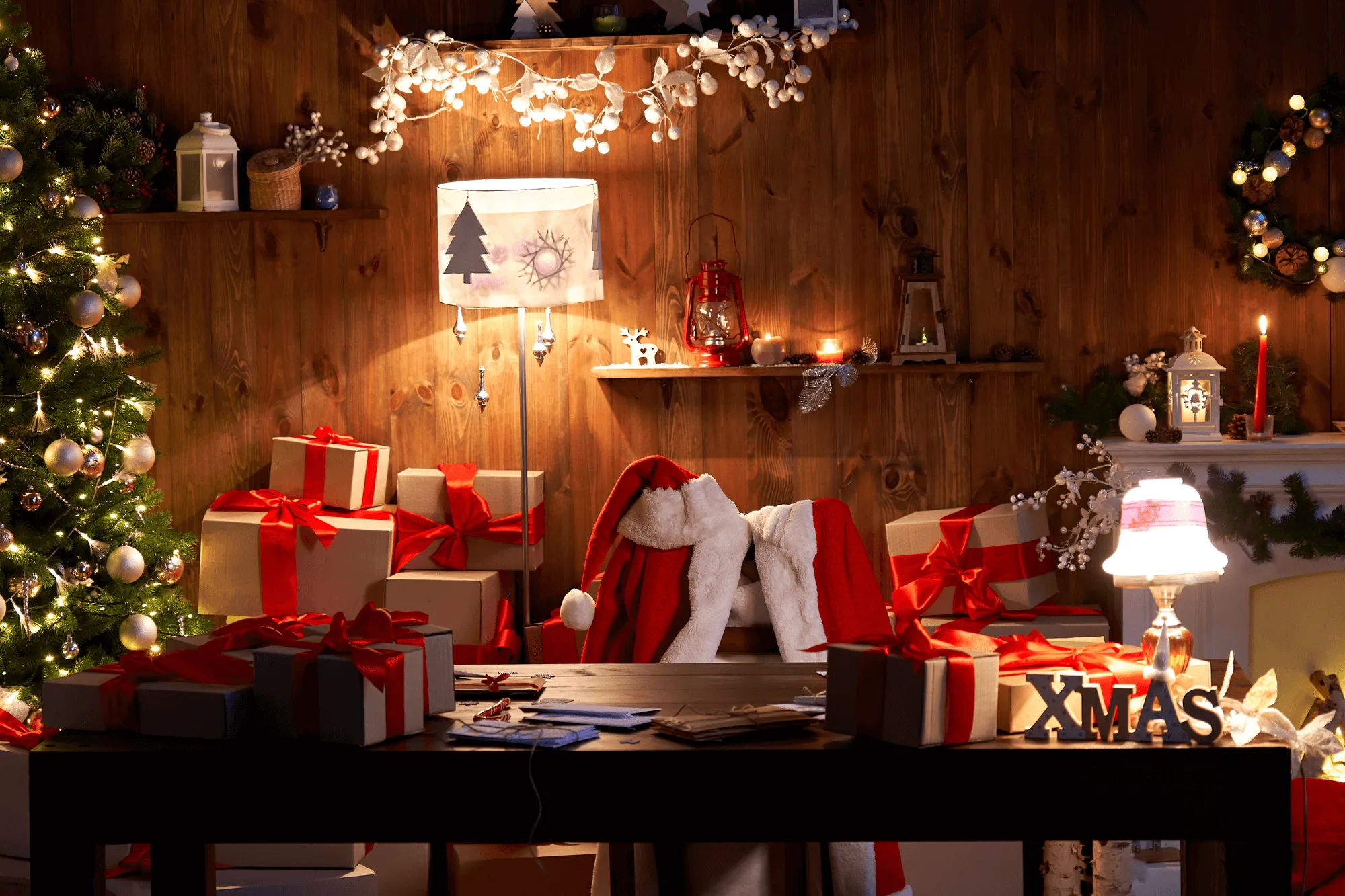
Santa’s seating area – A solid throne or high-backed chair is central. It needs to hold an adult and a child safely, and sit in front of a photogenic backdrop. Fairy lights, velvet drapes, faux stone panels, or garlands all work well.
The approach – Use signage and props to build anticipation before children reach Santa. ‘This way to Santa’s workshop’ signs, footprints on the floor, and elves’ hats pegged to a line add texture to what might otherwise be a plain corridor.
Lighting – Warm fairy lights with dimmed general lighting create an immediately festive feel. Avoid flashing or strobe lighting, which can distress young children.
Sound – A Christmas music playlist at low volume does more than most decorations to establish atmosphere. Set it running before visitors arrive.
Fake snow – Dusted on surfaces or scattered around the throne base, it’s always a hit. Used too liberally, it creates a slip hazard. Test before the day.
What presents should I give at a grotto?
Presents are expected. Even a small token matters to a young child, and you don’t want anyone leaving disappointed.
Keep presents age-appropriate and gender-neutral. Group by age: toddler (under three), young child (three to six), older child (seven to eleven). Books, stationery, small toys, and puzzles all work well.
One approach that extends the experience: Santa gives each child a token redeemable at a ‘workshop’ table where they choose their own gift. Children leave with something they actually want.
If presents are donated, thank donors publicly. Recognition matters for future support.
What health and safety checks do I need?
You’re running an event for young children, which raises the stakes on safety planning.
Before the event opens, complete a risk assessment: power cables covered, decorations secured, paths clear and well-lit, props free of sharp edges, and floor coverings that could become slip hazards removed. Have a first aid kit on site and a designated responsible person. Brief every helper and agree on a process for what happens if a child becomes separated from their carer.

Should I take grotto bookings in advance?
Walk-up queues with young children are stressful. Pre-booked timeslots solve almost all of that.
Booking in advance lets you manage capacity, gives families a confirmed arrival time, and cuts wait times on the day. Collecting the child’s name and age at booking also lets you brief Santa beforehand – a detail that genuinely impresses children and parents.
If you’re using TryBooking, you can set up sessions with individual timeslots, cap each slot, and collect what you need from families through custom form fields. The free scanning app makes check-in on the day simple.
How do I promote my Christmas grotto?
Start promoting as soon as you have a date and a booking page. The earlier families can plan around a confirmed slot, the better your numbers will be.
Christmas grotto promotion is usually local. School newsletters, community Facebook groups, and local noticeboards are your most effective channels. Keep the message simple: date, location, booking link, and whether gifts are included. A short video or photo from a previous grotto builds confidence and excitement.
Test your booking link before you share it anywhere.
How can TryBooking help with my Christmas grotto?
TryBooking is well-suited to Christmas grottos, particularly ones with multiple timeslots or sessions running across several days. You can set up a single event page with sessions for each day, cap slot sizes, and use custom form fields to collect child names, ages, and any other information Santa needs. If your grotto is a fundraiser, donations can be added to the booking page alongside ticket sales.
The free scanning app handles check-in quickly – important when families are arriving with young children in the cold.
Frequently asked questions
How long should each grotto visit last?
A five-minute slot per child works for most grottos. If you’re including a professional photo, allow seven minutes. Families with multiple children may need longer – consider offering a “family slot” of ten minutes for groups of two or more children. Build in a five-minute buffer every hour for Santa breaks and schedule resets.
How much does it cost to set up a Christmas grotto?
A basic school or community grotto can be set up for $200-$500 using borrowed furniture, donated decorations, and fairy lights. A more polished setup with a quality throne, professional backdrop, and themed props typically costs $500-$1,500. The biggest variable is presents – budget $5-$15 per child depending on the gift quality. For a fundraising grotto running 100 visits over a weekend, total costs of $1,000-$2,000 are typical.
Do I need a police vet for grotto volunteers?
In New Zealand, anyone with unsupervised contact with children in an organised activity should go through a New Zealand Police vet arranged by your organisation, and groups covered by the Children’s Act 2014 have additional formal safety-checking obligations for “children’s workers.” This applies to your Santa, elves, and any volunteers interacting directly with children. Process vetting well in advance – it can take several weeks to come through, longer during the busy run-up to Christmas. Your organisation may also need to meet its own child-safe policy standards.
What age group is a Christmas grotto best for?
Grottos are most popular with children aged 2-8. Children under 2 may be frightened by an unfamiliar figure, so brief parents at check-in and give them the option to hold their child during the visit. Children aged 9-11 may still enjoy the experience, especially if it includes a conversation with Santa about their interests rather than just a “what do you want for Christmas” exchange. Collect the child’s age and name during booking so Santa can personalise each visit.