
Raffle fundraiser guide
Raffles are one of the most popular fundraising tools for New Zealand community organisations – schools, sports clubs, surf clubs, marae, scout and guide groups, charities, and more use them every year to raise money and bring their communities together. Done well, a raffle is low-cost to run, easy to promote, and genuinely fun for participants.
This guide covers what you need to know: the legal requirements under New Zealand gambling law, how to plan and run your raffle, and how to sell tickets both online and in person.
Do I need a licence to run a raffle in New Zealand?
Raffles are a form of lottery, regulated under the Gambling Act 2003 and administered by the Department of Internal Affairs (DIA). Whether you need a licence comes down to the size of your raffle – specifically the total value of the prizes and your potential turnover (total ticket sales). Raffles fall into one of three classes.
Community raffles are run by a “society” – a not-for-profit group such as a club, school, charity, or community organisation raising funds for an authorised purpose. Proceeds can’t go to private commercial gain. These are general rules – always confirm current requirements with the Department of Internal Affairs before you start.
Class 1: small raffles (no licence)
If both your total prize value and your total turnover (ticket sales) are $500 or less, your raffle is Class 1. No licence is required, and a Class 1 raffle can be run by an individual or a society. This covers most small, one-off raffles at a school gala, club quiz night, or community fair.
Class 2: mid-sized raffles (no licence, societies only)
If your total prize value is more than $500 but no more than $5,000, and your total turnover is no more than $25,000, your raffle is Class 2. No licence is required, but only a society – not an individual – can run one, and the proceeds must go to your authorised purpose. Bank the proceeds into your organisation’s account and keep clear records of how the funds were used.
Class 3: large raffles (licence required)
If the total value of your prizes is more than $5,000, your raffle is Class 3, and you must hold a licence from the Department of Internal Affairs before you sell any tickets. Only societies can run Class 3 gambling. Apply well ahead of your draw date, as the application takes time to process.
Whichever class applies, you must follow the Gambling Act 2003 and the relevant game rules: tickets must be individually numbered, the draw conducted fairly, winners notified promptly, and proceeds used for the stated purpose. If you’re not sure which class your raffle falls into, the Department of Internal Affairs publishes the current rules and licence application forms.
How do I plan and set up a raffle fundraiser?
Once you’ve confirmed which class your raffle falls under, the practical planning is straightforward.
Choose prizes that motivate ticket sales
A raffle lives or dies on its prizes. The first prize should be genuinely desirable – vouchers for local businesses, experiences (restaurant dinners, spa days, event tickets), electronics, or sporting goods all work well. Ask local businesses to donate prizes in exchange for a mention on your event page and promotional materials; many are happy to support community organisations. Keep an eye on your prize total so you stay within the class you’re planning for.
Keep prize values in line with your ticket price. If tickets are $2 each, your first prize should be worth at least $50–$100 to feel worthwhile.
Set your ticket price and sales target
Work backwards from your fundraising goal. If you need to raise $1,500 and your prizes and costs total $400, you need to generate $1,900 in ticket sales. At $2 per ticket, that’s 950 tickets. Is that realistic for your organisation’s reach? If not, adjust your ticket price or scale your prizes. Remember your total ticket sales also decide your class – keep turnover to $25,000 or under to stay within Class 2.
Common approaches:
- Single tickets at a fixed price (e.g., $2 per ticket)
- Bundle pricing to encourage bulk purchases (e.g., 5 tickets for $8)
- Separate ticket books for committee members or volunteers to sell within their networks
Set a clear draw date
Give yourself enough lead time to sell tickets without momentum dropping off. Four to six weeks is a practical window for most community raffles. Announce the draw date prominently on all promotional material and stick to it.
Keep your records tidy
Whichever class your raffle falls under, keep accurate records of ticket sales, draw outcomes, and prize distributions. Class 2 and Class 3 raffles in particular need to account for how the proceeds were used. Good records also make it easy to wind up the raffle cleanly and confirm winners promptly.
How do I sell raffle tickets online?
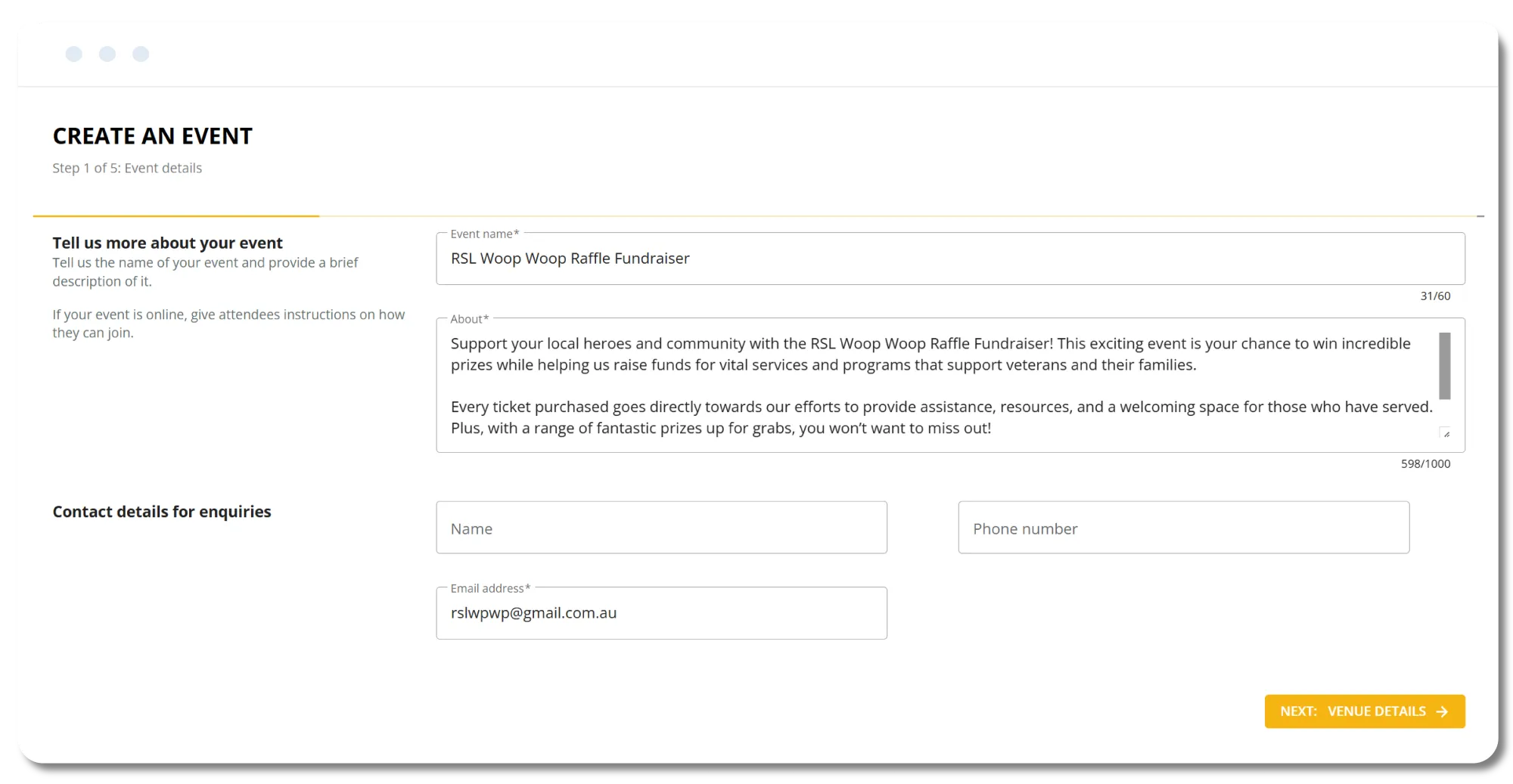
Online raffle sales dramatically expand your potential audience beyond your existing membership or community. Rather than relying solely on committee members selling ticket books, you can promote a link and let supporters buy tickets from anywhere.
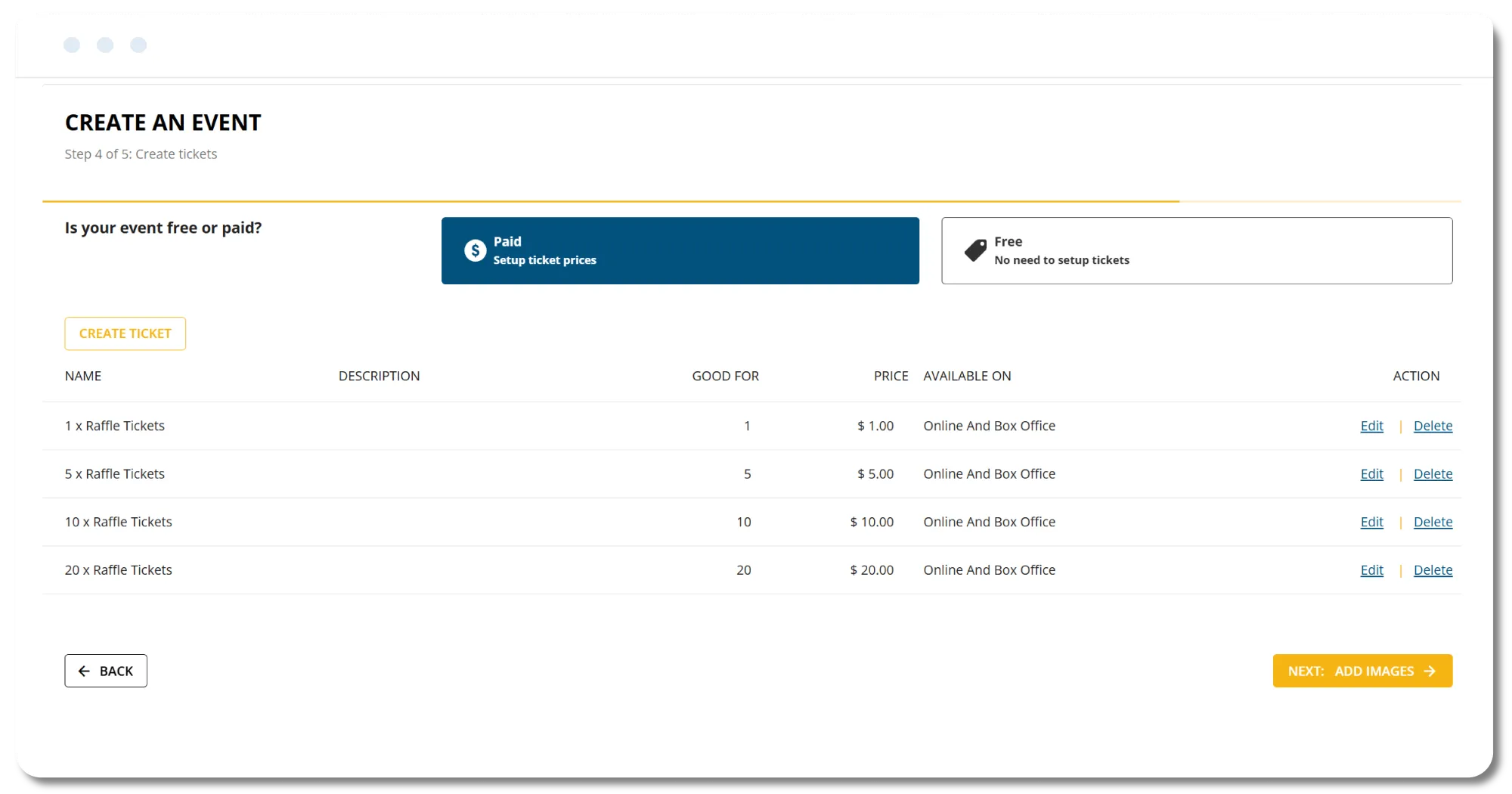
When selling raffle tickets online, each ticket must be individually numbered and issued at the time of purchase. Your event page should clearly state:
- The draw date and location
- All prizes and their values
- How winners will be notified
- The organisation running the raffle and how proceeds will be used
TryBooking lets you set up an event where supporters can purchase raffle tickets directly. You can create separate ticket types for different bundle sizes, add a description of the prizes, and use the reporting tools to track sales in real time as your draw date approaches.
How do I sell raffle tickets in person?
In-person sales are still a staple for community raffles – at club events, school galas, markets, and match days. The challenge is handling cash and card payments quickly without a dedicated terminal.
The TryBooking Box Office app turns any compatible iOS or Android device into a payment terminal. Your volunteers can accept contactless card payments, mobile wallet taps (Apple Pay, Google Pay), and cash – all tracked against your TryBooking event. No separate card machine required, and all sales are automatically reconciled in your reports.
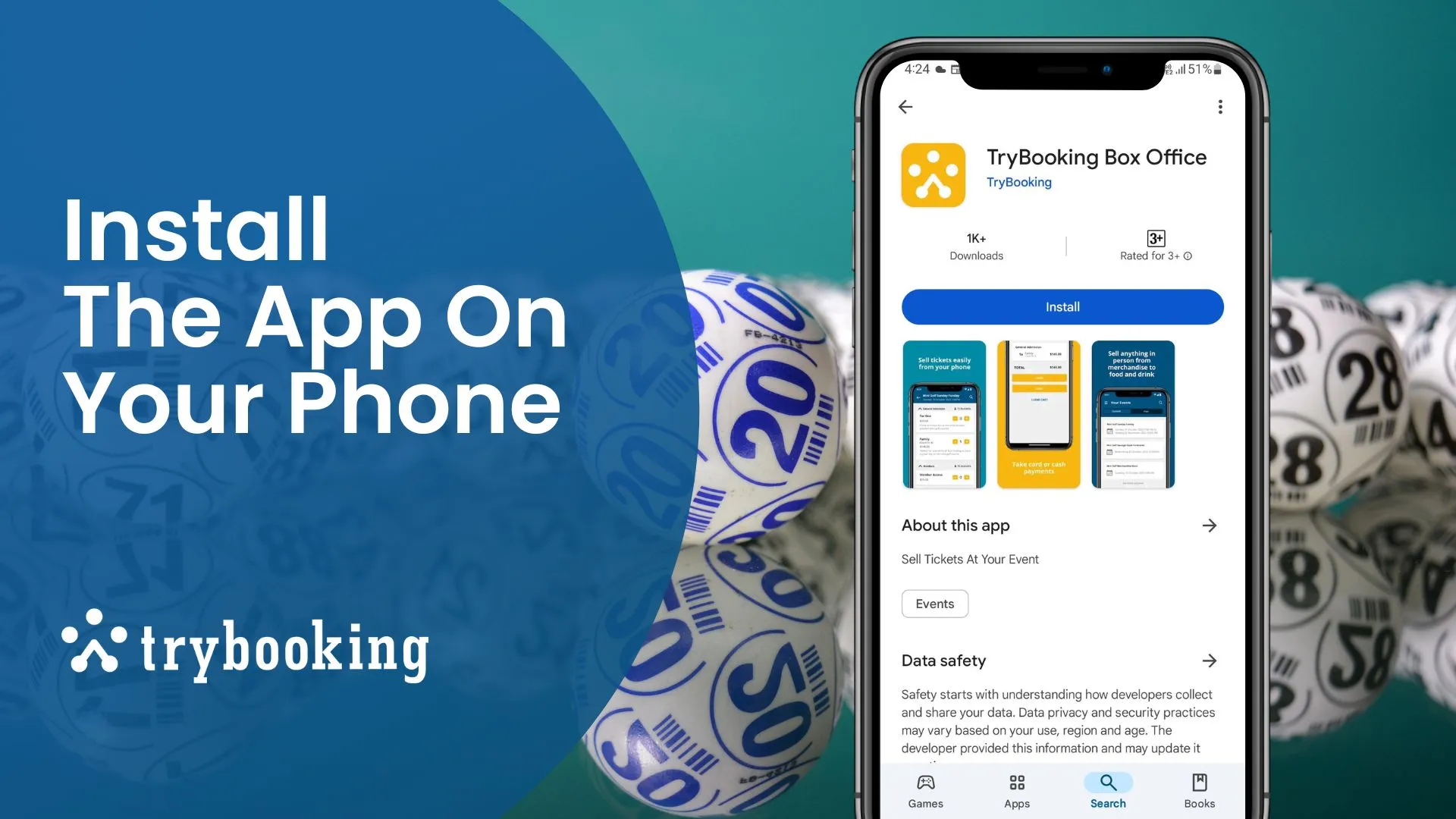
To set up in-person sales:
- Create your raffle event on TryBooking with ticket types for each price tier
- Download the Box Office app on the devices your volunteers will use
- Enable NFC on each device (required for tap-to-pay)
- Log in and select your raffle event at the start of each selling session
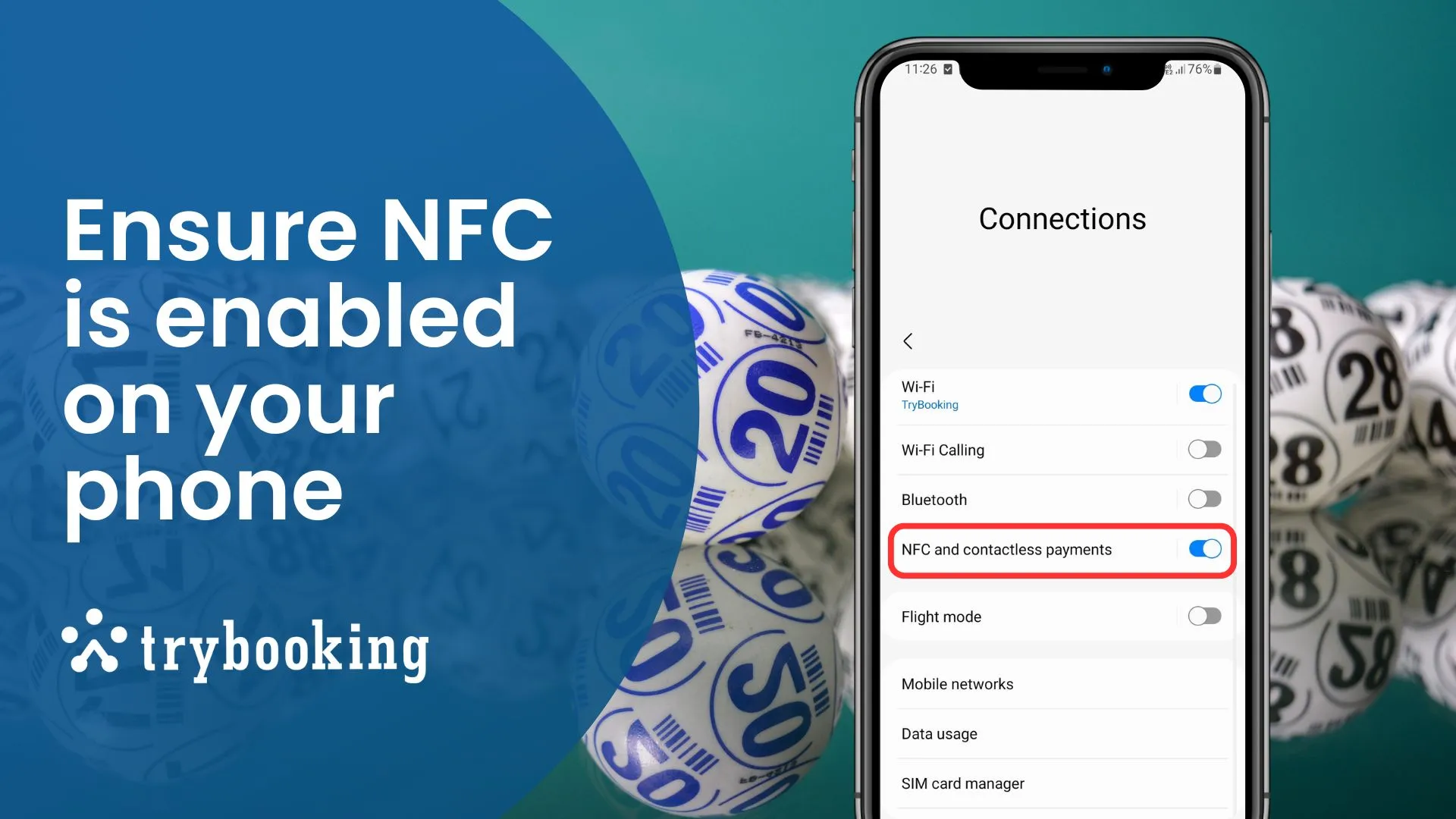
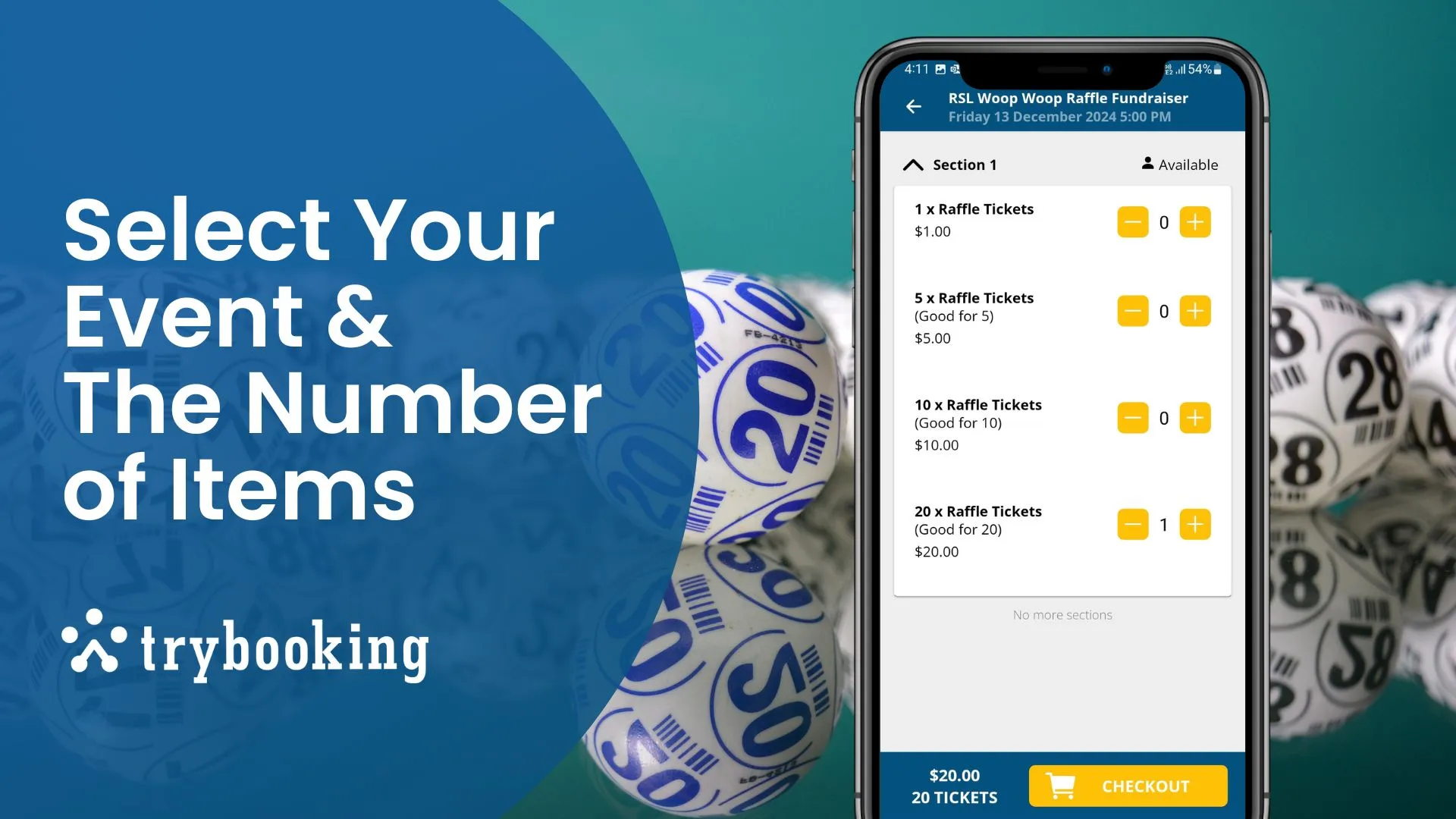
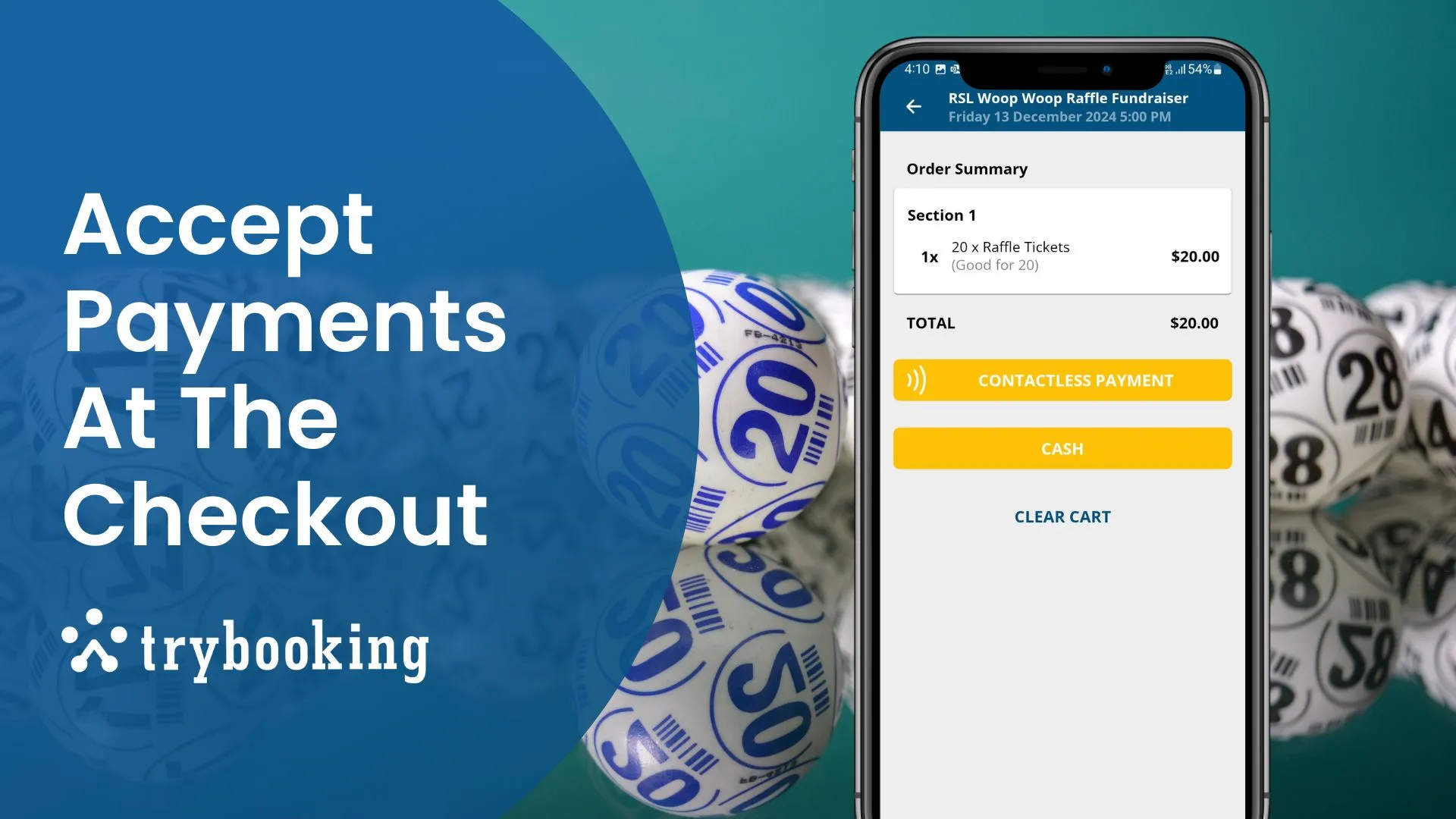
Payments are processed directly through your TryBooking account, and you’ll have a real-time view of total sales across both online and in-person channels.
How do I run the raffle draw?
The draw itself should be public, transparent, and random. For a Class 3 (licensed) raffle, the draw must be overseen by an independent supervisor – someone authorised to take statutory declarations, such as a Justice of the Peace, a barrister or solicitor, a notary public, or a Member of Parliament.
Practical tips:
- Hold the draw at a public event where possible, or livestream it if your community is primarily online
- Use a genuinely random method – a physical barrel or bowl, or a random number generator
- Announce results promptly and contact winners directly
- Publish winners on your website or social media
What do I need to do after the raffle?

Use TryBooking’s reports to review total ticket sales, revenue, and payment method breakdowns. This data is useful for planning your next raffle – you’ll know which ticket price points sold best, whether online or in-person sales dominated, and whether your sales target matched reality.
For Class 2 and Class 3 raffles, make sure you can account for how the proceeds were used for your authorised purpose, and complete any reporting your licence requires.
Running a raffle is one of the most effective low-cost fundraisers available to New Zealand community organisations. With the right preparation, clear prize incentives, and a simple way for supporters to buy tickets, it’s a format that consistently delivers.