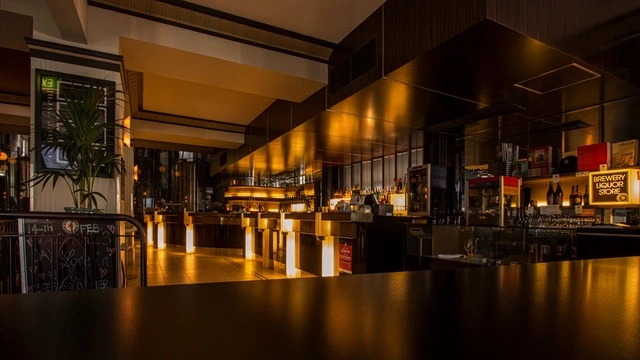
Event venue selection guide
Choosing the right venue is one of the most consequential decisions you’ll make as an event organiser. Get it right and everything else becomes easier. Get it wrong and you’re managing problems for the entire event. This guide walks through every factor worth considering – from capacity and accessibility through to permits and insurance – so you can make a confident, informed decision.
How do I assess venue capacity and layout?
Before you look at a single venue, know your numbers. How many people are you expecting? What’s your minimum viable attendance, and what’s your realistic maximum? You want a venue that comfortably holds your expected numbers – not one so cavernous that a crowd of 200 feels sparse, and not one so tight that a full house becomes a fire hazard.
Capacity isn’t just a headcount. It depends on how you’re using the space. Theatre-style seating fits far more people than round tables. A standing cocktail event can hold twice as many people as a sit-down dinner in the same room. Ask venues for their capacity figures for your specific configuration, not just their headline number.
Layout flexibility matters if you’re running a hybrid event or want different zones – a registration area, a networking space, a seated dinner section. Walk the floor of any venue you’re seriously considering. Ask whether walls can be moved, whether furniture can be rearranged, and whether there are restrictions on what you can bring in or build.

How important is venue location and transport access?
Your attendees don’t care how good the venue looks in photos if they can’t get there. Location should be considered from the perspective of the people you’re trying to reach, not yours.
For events in major cities, proximity to public transport is significant. Parking availability matters for suburban and regional events. If your audience is travelling from interstate or internationally, proximity to airports and accommodation becomes relevant.
Ask yourself:
- Is the venue within reasonable distance of where most attendees are coming from?
- Is parking available on-site or nearby? Is it free or paid?
- Are there accessible transport options (train, tram, bus)?
- Is the address easy to find and communicate? A confusing entry point or a venue inside a building complex can frustrate guests on the night.
For events that will finish late at night, think about how attendees will get home safely. Venues near taxi ranks, rideshare pick-up points, or late-night public transport have a real practical advantage.
How do I check a venue’s accessibility?
Every event should be accessible to people with disabilities. In Australia, the Disability Discrimination Act 1992 sets baseline requirements, but “compliant” doesn’t always mean “genuinely accessible.” A ramp that exists but is difficult to navigate, or a bathroom that technically qualifies but is inconveniently located, still creates barriers for attendees.
Check the following in person:
- Step-free access from car park and street to the event space
- Accessible toilets, and their proximity to the main event space
- Hearing loops or audio induction systems for attendees with hearing impairments
- Sightlines for wheelchair users – can they see the stage or presentation screen from accessible seating positions?
- Whether lift access is reliable and well-maintained (not just present)
If you’re asking about accessibility on a booking form, or promoting the event to communities that include people with disabilities, it’s worth noting specific features rather than just saying “accessible venue.”

What should I know about venue catering arrangements?
Catering is one of the most common sources of venue-related cost blowouts and logistical headaches. Understanding the venue’s approach early will save you trouble later.
In-house catering is convenient but sometimes inflexible. You may be required to use the venue’s catering package with limited ability to customise menus, pricing, or supplier choices.
External catering gives you more control but requires the venue to have appropriate kitchen facilities or at least adequate preparation space, power access, and waste disposal. Check whether there are bump-in restrictions or time limits for caterers.
Key questions to ask:
- Is there a preferred or exclusive caterer, or can you bring your own?
- Does the venue hold a liquor licence? What are the conditions?
- Are there facilities for attendees with dietary requirements (separate preparation areas, labelled service)?
- Is crockery and linen included, or does that add cost?
If you’re running a dry event, community event, or an event where children are present, confirm the venue’s position on alcohol clearly before signing anything.
What AV and technical requirements should I check?
Many venues will tell you they have AV equipment. Fewer will have equipment that’s actually fit for purpose. Bring a checklist and ask specifically.
Assess:
- Screens and projectors – size, brightness (lumens), and whether they’re suitable for your room dimensions
- Microphone systems – handheld, lapel, and lectern options
- Speaker quality and coverage throughout the space
- Lighting rigs and control – is the existing lighting adequate, or do you need to bring in production?
- Internet connectivity – upload and download speeds for live streaming, registration systems, or presenter slides
- Power supply – number of outlets, circuit capacity, and whether you can run additional equipment without tripping breakers
If you’re running a conference, live performance, or any event where technical quality matters, visit the venue with the person responsible for AV before committing. A walk-through takes an hour and can prevent significant problems on the day.
What permits and legal requirements apply to my venue?
This is the area many organisers underestimate – particularly for outdoor events and events with amplified music, large crowds, or alcohol.
Common permit requirements in Australia include:
- Council permits – Required for events in public spaces (parks, streets, plazas). Processing times vary by council, but six to twelve weeks is common. Some councils require detailed event management plans, noise management plans, or traffic management plans as part of the application.
- Liquor licensing – If you’re selling alcohol at an event, or allowing alcohol consumption, you may need a special event licence or a temporary variation to an existing licence. State-based licensing authorities manage this.
- Road closures – Events that require street closures need approval from both the local council and the relevant roads authority. Allow significant lead time.
- Food handling – If you’re preparing or selling food, registration with your local council under the Australia New Zealand Food Standards Code may apply.
- Noise approvals – Amplified music at outdoor events often requires written council approval, and must adhere to decibel limits and cut-off times. Check the venue’s existing approvals before assuming your event will fit within them.
If the venue is an established event space, they’ll have dealt with most of these before and can guide you. For non-traditional venues or public spaces, plan for a longer approval process than you think you’ll need.
Do I need insurance and public liability cover for my venue?
Even if it’s not legally required for your specific event, public liability insurance is strongly recommended for any event where members of the public are present. Many councils and venues require it as a condition of use – typically at a minimum coverage level of $10 million to $20 million.
Check whether the venue carries its own public liability insurance and what it covers. Understand where their coverage ends and where yours needs to begin. In most cases, the event organiser holds a separate policy that covers the event itself, with the venue’s coverage applying to their own premises and operations.
For events with higher inherent risk – performances with physical activity, events involving large crowds, outdoor events exposed to weather – speak with an insurance broker who specialises in events rather than relying on a general business policy.
How do I negotiate venue costs?
Most venue costs are negotiable, particularly for bookings made well in advance, events held on low-demand dates (midweek, off-peak seasons), or events that represent repeat or bulk business.
Areas where negotiation is common:
- Room hire rates
- Minimum spend requirements at in-house bars
- Add-on services (AV support, event coordinators, cleaning)
- Access times for bump-in and bump-out
Get itemised quotes so you can identify which components you actually need. A venue coordinator who “comes with the room” might be valuable for one event type and unnecessary for another. Don’t pay for inclusions you won’t use.
Should I visit the venue before booking?
Read every brochure you like, but visit the venue in person before signing any contract. Bring your event’s specific requirements with you and test them against the physical reality of the space.
Arrive at the same time of day your event will run – natural light, noise from adjacent businesses, traffic outside, and even the mood of the space differ significantly between morning and evening. If your event runs for several hours, try to understand how the space feels as it warms up and gets used.
How can TryBooking help with venue logistics?
If you’re using TryBooking to manage registrations, you can build venue-specific information directly into the booking confirmation email – including directions, parking details, and any access instructions. For events with assigned seating, TryBooking’s seating plan tool lets you map the room layout and manage seat allocations without a separate system. That’s one less thing to coordinate with your venue on the day.