


Most event organisers are already thinking about safety, insurance, and what happens if something doesn't go to plan. The practical question is usually where to start and what actually needs to be in place before you open the doors. Whether you're running a village fete, a school fundraiser, a fireworks night, or a ticketed festival, the underlying responsibilities are broadly the same, even if the scale is very different.
This guide covers terms and conditions, insurance, risk assessments, crowd management, data protection, and contingency planning. We've also included recent changes like Martyn's Law, which will affect any venue regularly hosting 200 or more people from Spring 2027. Where there are legal requirements, we've linked to the relevant official guidance so you can check the detail for your situation.
It's worth getting most of this in place early, ideally while you're still in the planning stage rather than the week before the event. Insurance policies are cheaper the further ahead you buy them, risk assessments are easier to write when you're not under pressure, and terms and conditions are far more useful when they go out with the first ticket than when they're drafted after a dispute.
Our top tips on how to protect your event
Terms and conditions
Good terms and conditions set expectations before anyone buys a ticket. They're a contract between you and your attendees, and they're your first line of defence if something goes sideways.
Keep them short, clear, and specific to your event. A wall of legal text that nobody reads won't protect you. A concise set of policies that people actually understand will.
Refunds and cancellations
Be upfront about your refund policy. You can set a "no refunds" policy or allow refunds within a specific window, but you need to state it clearly before anyone books.
One thing worth knowing: if your event doesn't run as promoted (it's cancelled, or the date changes significantly), your ticket buyers are entitled to a refund or an alternative under the Consumer Rights Act 2015. A "no refunds" policy won't override that. The CMA's guidance is clear that holding on to prepaid ticket money when the event didn't go ahead is likely to be considered unfair.
The Act also specifies that refunds must be given without undue delay, and no later than 14 days from when you agree the consumer is entitled to one. The refund has to use the same payment method the buyer originally used, and you can't charge a fee for processing it. Worth building into your planning, because if you do need to cancel, that 14-day clock starts ticking as soon as you acknowledge refunds are due.
Event cancellation insurance (more on that below) can help cover you financially in these situations.
Data protection
If your ticket buyers are in the UK, you're covered by the UK GDPR regardless of where the event takes place. In practice, that means you need to tell people how you'll use their data. The simplest way is to link a Privacy Notice in your terms and conditions and make sure your contact details are easy to find.
The ICO's guide to data protection is the best starting point if you're unsure what's required. You can also find an example set of terms and conditions on our Learning Centre.
Event insurance
Insurance feels like one of those things you hope you'll never need, but it only takes one incident to understand why it matters. The right cover depends on your event type, size, and what could realistically go wrong.
Public liability insurance
This covers you if someone is injured or their property is damaged at your event. It's not legally required in the UK, but many venues insist on it as part of their hire agreement. Some will ask to see a certificate before they'll confirm your booking.
If you're running any kind of public-facing event, especially outdoors or on land you don't own, public liability insurance is worth having regardless of whether the venue demands it. Costs are lower than most people expect: one-day policies start from around £31 for £5 million of cover, and annual event organiser policies can start from around £78 per year for £2 million. Cover typically ranges from £1 million to £10 million depending on your event's size and risk profile. Most small community events, fetes and fundraisers will be fine with £5 million.
Event cancellation insurance
Things go wrong. Storms, transport strikes, a venue pulling out at the last minute. Cancellation insurance protects your budget and any profit you've already committed. It's particularly worth considering if you've got significant upfront costs that you can't recover through ticket refunds alone.
Buy it as early as possible. Most policies won't cover events that are already at risk of cancellation when you take out the policy.
Employers' liability insurance
If anyone is employed to work at your event, even temporarily, employers' liability insurance is a legal requirement. It covers compensation claims if an employee is injured or becomes ill because of the work they did for you. This applies even if you've only hired a couple of people for the day.
Specialist cover for higher-risk events
Some events carry inherently higher risk: fireworks displays, motorsport, airshows, anything involving pyrotechnics or extreme sports. Standard public liability policies often exclude or limit cover for these, so check the detail carefully and speak to a specialist broker if needed.
If you're planning a fireworks display on farmland, for example, you'll need insurance that specifically covers the pyrotechnics as well as the crowd. Our farm diversification guide also covers the insurance considerations for outdoor farm events.

Safety and security
Risk assessments
If your event involves employees or members of the public, you're legally required to carry out a risk assessment under the Health and Safety at Work Act. Even for small community events, it's good practice and many venues will ask to see one before confirming your booking.
A risk assessment doesn't have to be a long document. The HSE breaks it down into five steps: identify the hazards, decide who might be harmed and how, evaluate the risks and decide on precautions, record your findings, and review regularly. For a village fete, that might take an hour. For a larger outdoor event, you'll need more detail, but the structure is the same.
Common hazards at events include trips and slips (cables, uneven ground, wet surfaces), crowd crush at entry points, vehicles sharing space with pedestrians, temporary structures that could collapse, and weather exposure. For each one, write down what you'll do to reduce the risk. If you have fewer than five employees, you don't legally need to write it down, but do it anyway. It's the document you'll be glad you have if something goes wrong.
Martyn's Law
Safety planning isn't just common sense; parts of it are now a legal requirement. The Terrorism (Protection of Premises) Act 2025, known as Martyn's Law, applies to any venue that regularly has 200 or more people on site, including staff. That threshold is lower than most people expect. Schools, village halls, theatres, farm parks and sports clubs can all fall in scope.
We've written a full guide to Martyn's Law for event organisers, but the headlines are worth knowing here: if you're in scope, you'll need public protection procedures covering evacuation, invacuation (sheltering in place), lockdown and communication. There's no requirement for physical security at the standard tier. The focus is on having a plan and making sure your team has actually talked it through.
Even if your venue doesn't hit the 200 threshold, the principles are good practice for any event.
Crowd management
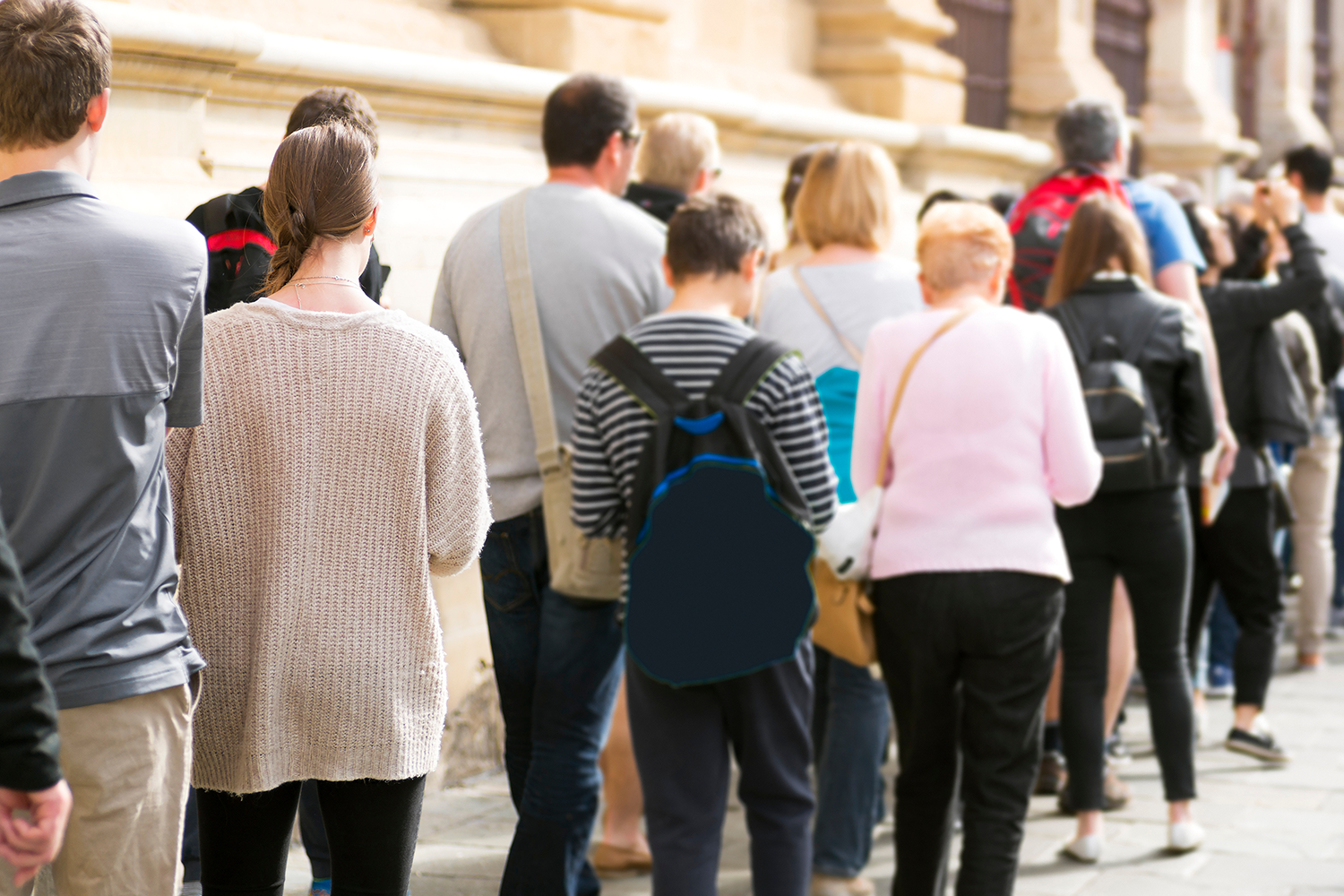
Your team needs to know the plan before the doors open. That means understanding how entry and exit points work, how to manage queues, and what to do if someone needs help. For smaller events, this might be a couple of volunteers managing check-in. For larger events, you may need dedicated security and coordination with local emergency services.
The HSE's event safety guidance is the standard reference for crowd management in the UK. Their key principle is worth remembering: as the organiser, you retain overall responsibility for crowd safety even if you've contracted out the stewarding. That means someone on your team needs to be clearly designated as responsible for safety decisions on the day, with the authority to act (including stopping or delaying entry if a queue is becoming unsafe).
Think about the three phases of any event: arrival and entry, movement around the site, and exit and dispersal. Each has different risks. Arrival is where queues build and people get frustrated. On-site movement is where overcrowding happens around food stalls, stages, or attractions. Exit is where people rush for transport and visibility may be lower if the event runs into the evening.
If you're running a ticketed event, scanning at the gate gives you a live count of who's on site. That's useful for managing capacity on the day, and it's the kind of information that Martyn's Law expects you to be thinking about. Our mobile scanning app handles this with a dedicated volunteer mode that protects your event data while keeping the queue moving.
First aid
Every event needs some level of first aid provision. For a small indoor gathering, a well-stocked first aid kit and someone who knows where it is may be enough. For anything with more than a couple of hundred people, you should be thinking about dedicated first aiders on site.
As a rough guide, the HSE suggests at least one first aider for every 500 attendees at lower-risk events. Higher-risk events (outdoor festivals, sporting activities, anything involving alcohol) need more. Organisations like St John Ambulance and the British Red Cross offer bookable event first aid cover, and for larger events they're often the most practical option. Book early, especially for busy weekends like bank holidays.
Make sure your first aiders know the layout of the site, have a clear route for emergency vehicle access, and can communicate with whoever is managing the event overall. A first aid point that nobody can find isn't much use.
Working with your local Safety Advisory Group
For larger events, it's worth finding out whether your local council has a Safety Advisory Group (SAG). Many do, and they exist to review event plans and offer advice before the event takes place. Submitting your plans to the SAG early is good practice, and for some event types councils will expect it.
A SAG typically includes representatives from the council, police, fire service, and ambulance service. Their input can flag things you've missed, and engaging with them early tends to make the licensing and permissions process smoother. Contact your local authority's events team to find out whether a SAG operates in your area.
Communication
Clear communication starts well before the event. Entry requirements, safety information, ticket details and schedules should all go out to attendees as early as possible, by email, social media, or through your event page.
On the day, think about how you'd get a message to everyone on site quickly. If your venue has a PA system, make sure someone knows how to use it. If it doesn't, work out who tells whom and in what order. This isn't just about emergencies; it's how you handle a delayed start, a venue change, or a weather-related announcement without things getting chaotic.
If you need to send updates to ticket holders after they've booked, our Email Buyers feature lets you reach everyone who's purchased a ticket in a couple of clicks.
Controlling access to your event
Sometimes you need to restrict who can book. If your event involves children, if it's invite-only, or if you need to verify attendees for safeguarding reasons, there are a few practical options.
Keeping your event page off search engines means only people with the direct link can find it. Password-protecting the booking page adds another layer. And using custom forms at the point of booking lets you collect the information you need (dietary requirements, emergency contacts, accessibility needs) before anyone arrives.
These aren't just security measures. They're part of running your event well, because the more you know about who's coming before they arrive, the smoother the day goes.
Cyber security and protecting attendee data
If you're collecting personal data through your booking platform, you're responsible for how it's handled. That means choosing tools with proper data protection policies, not sharing login credentials across your team, and using multi-factor authentication wherever it's available.
Check that your ticketing platform stores data in the UK, encrypts it properly, and lets you retain ownership of your customer data. You can read about how we handle data at TryBooking, including our UK data storage and encryption standards.
A few practical basics that are easy to get wrong: use individual logins rather than shared passwords, don't store customer data in personal spreadsheets or email threads, and make sure anyone with access to attendee information understands their responsibilities under the UK GDPR. If you're using volunteers to manage check-in, make sure they can't access data they don't need. Most booking platforms let you set permission levels for this.
When things go wrong
Contingency planning
Things will go wrong at some point. The question is whether you've thought about it in advance. A few things worth deciding before you sell your first ticket:
What's your weather policy for outdoor events? "What happens if it rains?" is the question you'll get most. Have a clear answer ready, whether that's a backup indoor space, an offer to reschedule, or ponchos at the gate.
What happens if the venue becomes unavailable? If you've got a backup option identified in advance (even loosely), you'll save yourself a lot of stress. If not, your cancellation insurance should cover the costs, but only if you've bought it.
What if a key supplier or performer cancels? Refundable deposits where possible, and a plan for how you'd communicate the change to ticketholders quickly. Your booking platform's email tools make this much easier than scrambling on social media.
Payment disputes and chargebacks
A chargeback happens when a ticket buyer disputes a charge with their bank. It can happen for all sorts of reasons: they don't recognise the payment on their statement, they've forgotten they booked, or they want a refund and have gone to their bank instead of you.
The best protection is prevention. Clear terms and conditions, a recognisable credit card display name, and good communication all reduce the risk. Strong Customer Authentication (the code your bank sends when you pay online) has also helped, but chargebacks still happen.
How disputes are handled depends on your payment setup. If you're processing payments directly through Stripe, you'll manage disputes yourself; Stripe's guide to disputes explains the process. If your ticketing platform handles payments on your behalf (which is how TryBooking's default pricing works), they'll handle the dispute process for you, since the charge was raised against them.
Either way, make sure your credit card display name is clear and recognisable. A surprising number of chargebacks happen simply because the buyer doesn't recognise the charge.

What to have ready on the day
Planning is one thing... having the right information to hand when the event is actually running is another. A few things worth keeping accessible (not buried in an email thread or on someone's home computer):
Your insurance certificate - Venues and local authority officers can ask to see this, and you don't want to be searching for it while the event is live. A digital copy on your phone is fine.
Your risk assessment - If something goes wrong and you need to show that you'd thought about the risks in advance, this is the document that matters.
Emergency contact details - the venue's emergency number, your nearest hospital, the non-emergency police number (101), and contact details for anyone providing services at the event (caterers, security, first aid).
An up-to-date attendee count – Sell tickets in advance, so you have a rough idea for attendance numbers. You can also confirm those numbers with a ticket scanning app on the day, rather than manually counting. This is especially useful if your venue has a capacity limit.
Event plan or running sheet – Ensure you share with the whole team. If you're the only person who knows the schedule and you're dealing with a crisis at the front gate, everything else stalls.
None of this takes long to prepare, and most of it you'll already have from the planning process. The trick is making sure it's accessible to the right people at the right time, not locked in one person's inbox.
Getting started
Most of what's in this guide is common sense that good organisers are already doing to some degree. The difference is writing it down, sharing it with your team, and having the right cover in place before you need it.
If you'd like to start selling tickets for your next event, create a free account on TryBooking. If you've got questions about any of the above, drop us a line and we'll help where we can.